The Spring Meetings of the World Bank and International Monetary Fund (IMF) concluded on the 18th of April this year, with more questions than answers on climate and energy transition agendas in the global south. Any hopes among experts looking forward to positive signals beyond speeches are likely to have been dashed. From a radical decline in official development assistance commitments, through intensification of the decline in bilateral finance, to the sustained prioritisation of private capital as the catalyst for climate and energy transitions, it was evident that climate finance was not a priority at the meetings. At best, reports of self-censorship of senior officials, and the removal climate finance from reports evidenced attempts to squeeze green priorities out the backdoor.
Perhaps the most curious development is the plan, led by the US and supported by Russia and several Gulf States, to compel the World Bank to abandon its climate change action plan. Launched in 2021, the plan is due to expire in June this year, and its opponents argue that it is contrary to the Bank’s poverty reduction objectives. Despite implementation challenges and failure to mobilise climate finance at scale, the plan nearly doubled the Bank’s climate finance to US$39 billion at close of 2025. It was also an important market signal through its 45% climate finance target.
The UK appears to be breaking ranks with this position, pushing for a support of an extension of the climate action plan, reaffirming support for multilateral development banks to commit to the US$120billion climate finance target by 2030, and demands for the Bank to support clean power generation across countries. Negotiations on the plan’s possible extension are ongoing.
At the meetings, the MDB’s joint statement on collaboration was also silent on climate finance and action. At the same time, they have doubled down on their commitments to finance critical minerals and manufacturing value chains, with the objective of unlocking private capital in these sectors. Even if lending continues under different labels, as it appears will be the case, the symbolic and practical pushback against climate priorities remains deeply concerning for climate vulnerable regions, which need predictable finance.
Climate action only for extraction, not for legacy impacts
The irony is: despite steering this direction of climate action and by extension finance, the nexus between climate, the energy transition, and the need for critical minerals appears to not be lost on the West. It seems that, climate action is only heeded attention when discussing Africa’s minerals to develop alternative energy systems, but not addressed when it concerns its impact on health, agriculture and local communities. It is at this level where the debilitating effects are felt the most.
The prioritisation of large cross-border infrastructure routes, linking ports, rail, energy and industrial zones to exploit critical minerals is testament to this thinking. The US-AU strategic infrastructure working group’s objectives – development finance tools for critical minerals and commodities supply chains, transportation corridors, and energy networks, and the Lobito corridor linking Angola, Zambia, and the DRC to facilitate trade and critical mineral supply chains, demonstrate that Africa may be walking alone on other climate finance priorities.
Mission 300 echoes this infrastructure focused approach, with 29 countries reportedly having submitted compact agreements. These compacts prioritise the expansion of infrastructure, regional power integration, renewable energy adoption, and private investment. Approximately 50% of investments are expected to come from the private sector, dashing any hopes of serious concessional finance. It will be noted that, in the run up to the meetings, a Private Sector Council was launched under the Mission 300 initiative, to accelerate investments to cover half of the expected funding for projects.
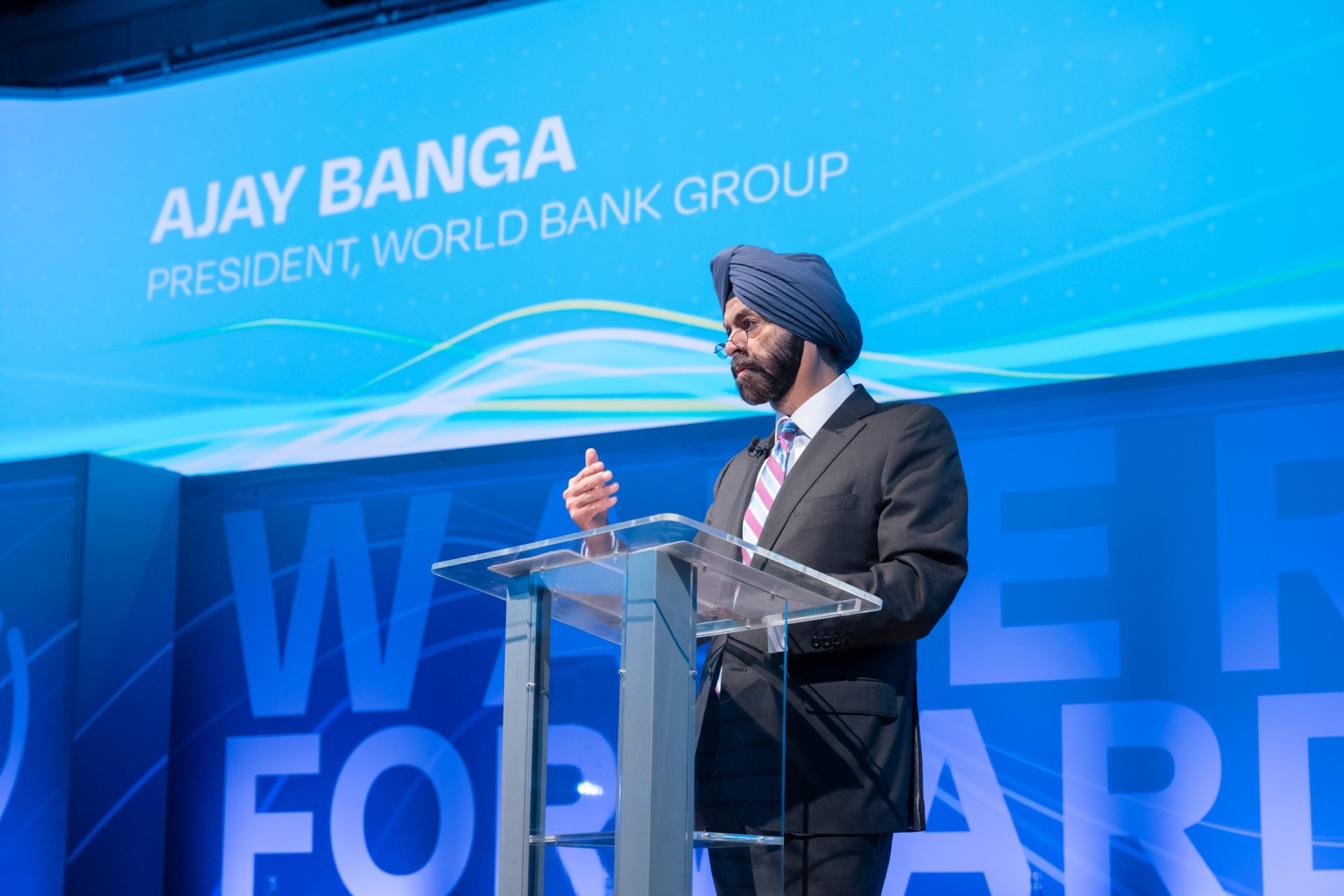
The framing of finance for climate action as competing against finance for infrastructure and jobs, creates a false dichotomy. When Ajay Banga – President of the Bank argues that the approach of the Bank is anchored in job creation as the most effective way to build self-sufficient economies, it suggests that other aspects of climate action, which are central to regions such as Africa, cannot deliver jobs. This view seems to have been informed by a cherry picking and mis-interpretation of data from institutions such as Afrobarometer, and pointing to the ranking of climate change in the bottom of priorities as a justification.
A fuller appreciation of development today should lead to the conclusion that the high-ranking priorities – unemployment, economy, health, education, hunger, poverty, and electricity, are not mutually exclusive of climate action. A plan to improve energy security in Africa, must prioritise renewable energy domiciled on the continent. Addressing hunger requires the deployment of climate smart and sensitive technologies and systems to optimise crop yields. A just transition program is also not possible without accounting for the health benefits from climate action – the COP30 Mutirão decision underscores this point. To this end, projects under some of the compacts in water, energy and agriculture are instructive, but raise the risk of fragmentation, particularly if the West and multilateral actors prioritise their individual country objectives, which can create inconsistencies with these frameworks.
High stakes and a proactive pathway
Abandoning the Bank’s climate policy framework could seriously undermine renewable energy funding, in a context of declining official development assistance, and shrinking climate related international lending. The pledges to meet the US$300billion climate finance target under the NCQG, will rely on MDBs including the Bank. Sidelining climate from the Bank’s core agenda will complicate the path with negative implications for regions such as Africa, where the Bank is also prioritising Mission300.
Given the deepening contradictions laid out above, where climate finance is sidelined even as critical mineral corridors are prioritised, and where Mission 300’s private-sector reliance offers little room for concessional adaptation funding, Africa and the broader Global South cannot afford to wait for a change of heart in Washington.
Instead, a proactive, coordinated pathway must be forged through two strategic interventions at upcoming global forums. First, at the World Bank’s June 2026 board vote on the Climate Change Action Plan, African finance ministers and civil society should unite with European and small-island states shareholders to demand not only an extension of the plan, but also binding amendments that link Mission 300 energy compacts to explicit climate resilience and just transition benchmarks, ensuring that renewable energy, agriculture, and health co-benefits are not sacrificed to infrastructure-led extraction.
Secondly, leveraging the G20 and the AU’s permanent seat, African leaders should table a debt, climate and energy agreement that requires multilateral development banks to report annually on the alignment of all infrastructure projects. Without such deliberate, forum-by-forum advocacy, the Global South risks being relegated to supplying minerals for others’ green transitions while bearing the full weight of climate impacts alone.