One of the first in Africa to adopt an explicit price on carbon, South Africa’s carbon tax, has long been the flagship of national mitigation policy after it was introduced in 2019. Since then, several other African countries have mooted an explicit carbon tax, including Côte d’Ivoire, Senegal, Kenya, Morocco, Mauritania, Ethiopia, Botswana, and Nigeria, with many having indirect pricing, such as vehicle taxes. But South Africa remains alone in the continent with its economy wide operational tax, often cited as precedent for the viability of carbon pricing systems in Africa.
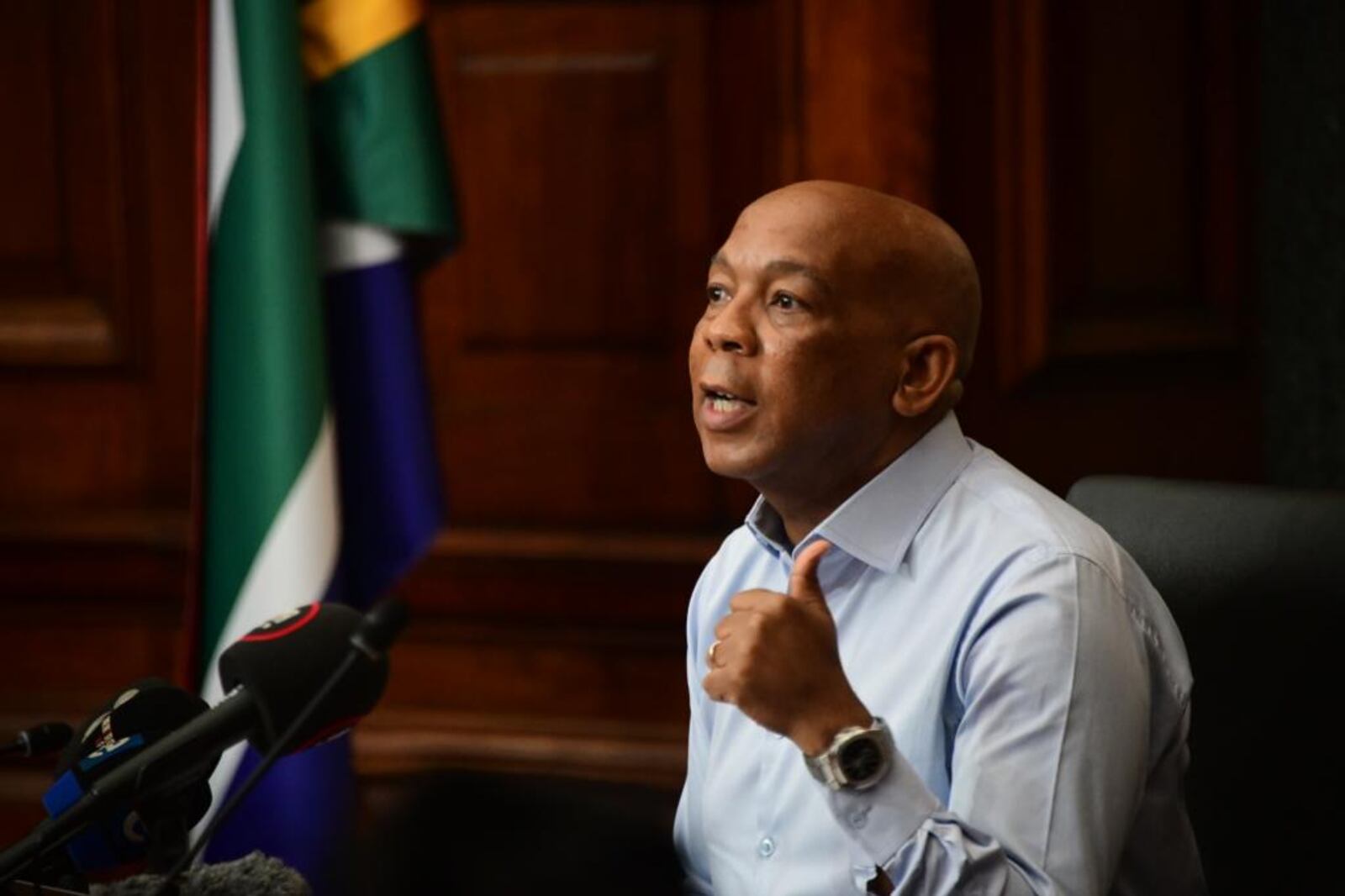
But last week it was reported that South African Electricity and Energy Minister Kgosientsho Ramokgopa, was working on a proposal to suspend the tax because it was punishing industry in circumstances where cleaner alternatives were unavailable, and that the tax was failing to achieve its desired objectives. It was argued that prevailing electricity grid constraints meant that industry was unable to procure low carbon energy, which was one of the original motivations for the tax.
The move raises interesting legal questions, relevant not only for South Africa but African economies more broadly considering an explicit carbon price: can a country lawfully walk back a central tenet of its mitigation policy in its Nationally Determined Contribution (NDC) under the Paris Agreement?
Under the Paris Agreement, a country must develop and implement successive NDCs, with each subsequent NDC representing a progression, and reflecting the nation’s highest possible ambition. In its opinion last year on the legal obligations of States in relation to climate change, the International Court of Justice confirmed that each NDC must be more demanding over time. It was found that countries do not have an unfettered discretion in determining their highest ambition, and NDCs must be guided by and work towards achieving the 1.5°C degree temperature goal. States are also bound to then actually implement their NDCs and must be vigilant in enforcing their domestic measures.
This demonstrates that an NDC is not simply a wish-list of measures a country puts forward under the Paris Agreement that it can update at whim. A material walk back of a country’s mitigation measures, would amount to a serious breach of its duties to ratchet ambition upwards under the Paris Agreement. It would also go against the principle of non-regression, which prevents countries from reducing or weakening existing levels of protection under their environmental and human rights laws.
It is in these instances that the proposal by Ramokgopa places South Africa on particularly shaky legal ground. South Africa’s carbon price has long been the cornerstone of national mitigation policy. For years, South Africa has been proposing the introduction of company level carbon budgets, but it has taken more than a decade to get these operational, and they remain voluntary to date. These budgets were meant to operate within larger Sectoral Emissions Targets for different sectors of the economy, which, too, are still in draft form. In the interim, the carbon tax has operated as the backbone of mitigation policy, generating about ZAR2 billion a year (approximately US$125 million), and was expected to triple by 2030 as tax exemptions were meant to be tightened between now and 2030.
But is the tax really central to South African mitigation policy and the achievement of its NDC? As early as 2015 in its first intended NDC under the Paris Agreement, South Africa said it was going to introduce a carbon tax along with carbon budgets as its two primary measures for mitigating GHG emissions. This was confirmed in the nation’s updated NDC in 2021, where the tax was put forward as one of a range of policies and measures including the Integrated Resource Plan (IRP) which sets out the blueprint of the country’s future energy mix, a long dormant draft Energy Efficiency strategy, and a Green Transport Strategy. Yet again, in October last year, South Africa revised its NDC, putting forward the carbon tax as a “national priority”, listing it among the same list of measures, alongside the country’s Just Energy Transition Framework.
While put forward as one of a mix of measures, in reality the carbon tax has played a central and dominant role to date. The phase-down of coal in the national power sector has been significantly delayed compared to previously communicated timeframes. While the IRP was finally updated last year to include a stronger renewable energy component, its roll out will take time and it only contributes a portion of the nation’s emissions profile. According to the latest IRP from October last year, its proposed changes within the electricity sector would likely contribute around 40% of the NDC’s target, leaving the remaining 60% emissions reduction up to other sectors. Mitigation measures in buildings, transport and industry have been slow. At present, the carbon tax is the only material measure that has been operating apace, and applied with increasing levels of stringency.
This then leaves the question, is the legal duty all about the mitigation target in an NDC, achieved in any which way, or is the legal duty about implementing the measures specified in the NDC, i.e. the actual implementation plans, leaving a country little to no room to deviate from them? I would argue both. A country must pursue its best efforts to achieve the target, and it must pursue domestic mitigation measures that aim to achieve its target and go about the business of implementing them. This gives a little leeway in the mix of measures to achieve the target, but there must at least be some in place to put the country on a path towards it.
South Africa’s revised NDC, from October last year, sets an emissions range of 350–420 MtCO₂e for 2026–2030, with a further range of 320–380 MtCO₂e for 2031–2035, together with a 2050 net-zero goal. The range is certainly more constrained than previous NDCs, but it proffers only a slow decline. Climate Action Tracker found that the country’s unconditional target of a 16–29% reduction below 2022 levels in 2035, was not compatible with a 1.5°C future. Which is all a way of saying that South Africa has a degree of wiggle room within its range to achieve its mitigation target.
It is theoretically possible that South Africa could still achieve its target range without a carbon tax, but the data on that is opaque. Government at least has posited it as a key instrument. In a discussion paper from 2024 on proposed revisions to the carbon tax rate, National Treasury described the tax as a “ key policy measure” to cost effectively achieve the NDC, and indeed the premise for revising the tax rates for 2025 up until 2030 was to help the country achieve its mitigation target.
In suspending or withdrawing South Africa’s only truly functional mitigation measure on operating emitters, South Africa is doing its NDC a significant disservice. In the absence of other effective mitigation measures that are in final form, implemented and enforced to fill the gap, South Africa will certainly not be using its best efforts or required level of legal due diligence to ensure it strives towards its highest level of ambition. In short, it will likely be breaching its international law obligations under the Paris Agreement if it suspends or abandons its tax. This does not mean countries cannot cancel or materially change their mitigation measures, but they need to have other operational measures in place to avoid backsliding.
Does this matter when the US is withdrawing from the Paris Agreement, or when developed countries are breaching their obligations to provide climate finance under Article 9? It does because it gradually erodes confidence in a system built on commitments made at a national level and upwards, and continues to further fracture faith in the multilateral system. A country cannot ask for financial support and investment as part of a process it is equivocal about.
Beyond the legal risks, there are naturally also economic and social implications. Energy policy specialist, Emily Tyler, rightly pointed out that “diluting the carbon price at this critical juncture risks locking in high-emission assets and costs that impact [the] entire economy.” She points out that as South Africa’s trading partners such as the EU tighten carbon rules, abolishing the tax will heighten border measure risks and erode investor credibility. It also undermines investor confidence in South Africa’s just energy transition, and pushes the cost of emissions back onto society. Instead she argues for the tax to be retained, with an enhanced design for the power sector and the strategic deployment of revenues to drive growth and reduce risk.
Activist organisations such as Just Share have also criticised the proposal, arguing that it is the product of industry lobbying which has been effective in weakening and delaying the implementation of the tax.
President Ramaphosa has reportedly requested the National Treasury to justify the measure, and it is anticipated that the Finance Minister will respond to questions on this issue when it tables the Budget on 25 February 2026.