By Olivia Rumble
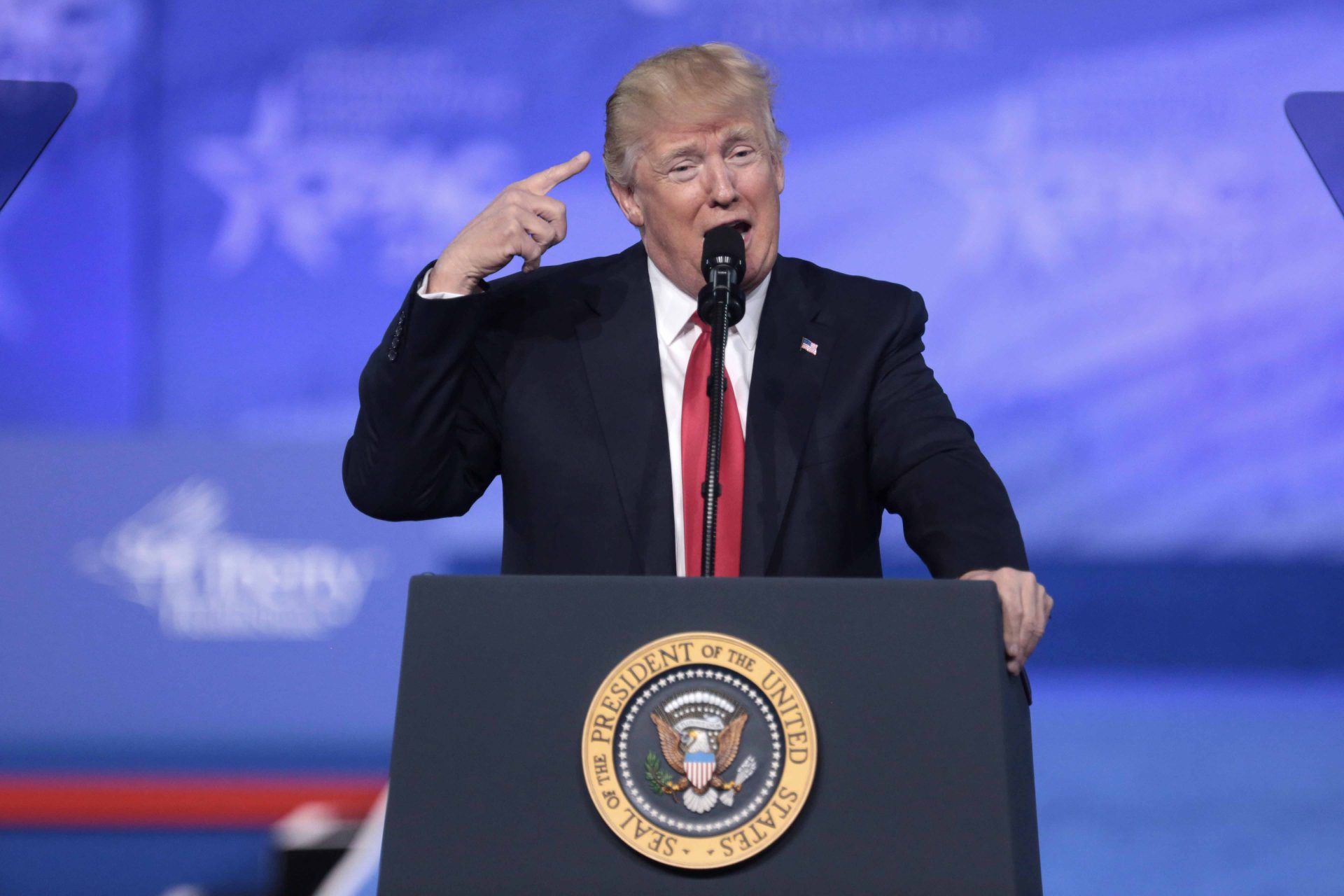
A few days after his inauguration last year, US President Donald Trump announced his intention to withdraw the country from the Paris Agreement for a second time. Last week, and almost exactly a year later, he followed this with an announcement that the country would also leave the United Nations Framework Convention on Climate Change (UNFCCC), a treaty that has governed the global regime since 1994. The nation has also elected to pull out of the international scientific body, the IPCC, it will vacate its board seat on the GCF, and will depart from dozens of other global organizations or initiatives not affiliated with the U.N.
The US exit makes it the only country to have abandoned the UNFCCC. It not only means that the US will not be able to attend negotiations, but it will leave a gap in emissions reporting under the global regulatory regime, making it more challenging to accurately estimate collective emissions. Stepping out of the UNFCCC also means abandonment of the duty to provide climate related financial support to developing countries.
That is not to say the US will not have climate change legal duties. The International Court of Justice confirmed that countries still have a legal duty to prevent significant transboundary harm from climate change and to cooperate with each other. These customary duties apply irrespective of a State’s withdrawal from the treaty regime. The US withdrew from the ICJ’s compulsory jurisdiction in 1986, meaning that it would be very difficult to bring legal proceedings against it in a global forum on these grounds. However whether it has a legal duty and whether states can enforce that duty are two different matters. Either way, whether the US wants to or not, it is still subject to the global climate international customary legal order.
At a practical level, some have argued that climate cooperation may be better off without a laggard like the US, where the rest of the world is held hostage to its internal wranglings, parsimony, and self-interest. Thomas Hale, a Professor of Global Public Policy at Oxford argues that the immediate effect of the withdrawal is relatively small in the short term given the Trump Administration had already stopped US mitigation and adaptation efforts and financial support, and was not engaging diplomatically. But the medium-term impacts are more damaging for both the US and the rest of the world. It will now be easier for climate slow countries to justify their actions based on the US’s withdrawal.
Hale also raised questions about whether the UNFCCC would remain the “focal institution” in climate politics following US withdrawal. The issue is not so much about the extent to which the US formally participated in the negotiations, but rather the loss of a layer of coordination, an exit that will likely entail further fragmentation across key stakeholders, particularly in relation to finance, rules and technology, and further weakens shared norms about coordination, participation and effort.
A related concern is how it will impact longstanding institutions tied to the UNFCCC, such as the GCF, whose funds are held in trust by the World Bank. The US, as the bank’s largest shareholder traditionally appoints the World Bank’s president. While the GCF is a legally independent body with its own board, the Bank not only manages its funds but also frequently partners in its projects. The Trump administration has already cancelled $4bn of pledged funds for the GCF. The US withdrawal from its board and UNFCCC will put the integrity and strength of this institution to test.
At this stage it’s not clear whether the President can irreversibly and lawfully extract from the UNFCCC and what the US Constitutional process for doing so would entail. It has been suggested that congress would need to approve the exit, although this is not clear. Legal scholar, Michael Mehling, has also pointed out that the Presidential text announcing the withdrawal reads less like a formal treaty termination than a strategy of deliberate de-facto disengagement. Whatever the correct process, the US retreat from global climate response will not be as clear cut as the Whitehouse suggests.
International aid is one example. Both Chambers of Congress still need to pass the compromise foreign assistance budget that emerged in recent days, which promises to boost US foreign aid with US$50 billion. The budget in its current form is a 16% reduction in what was approved last year, but pales against the nearly 50% cut that Trump had wanted to see. Once approved by Congress it will still require the President’s signature, however, which is far from a fait accompli. Moreover, the White House might stand in the way of the funds being spent. Be that as it may, it opens the door to a possible shift in US aid, As Devex points out, the compromise restores some funding to some critical programmes and funds, such as to the International Development Association, a fund of the World Bank for very low income countries, which is critical to assisting African countries with debt and which funds climate resilience projects, as well as US$5.4 billion for international disaster assistance, migration and refugee assistance.
There is also some hope for the restoration of the African Growth and Opportunity Act (AGOA) which has granted African states preferential access to US markets since 2000, but which lapsed last year. Earlier this week, the US House of Representatives voted to extend AGOA and approved a Bill for it to be revived for three years. It still needs approval by the Senate. Although not directly related to climate change, if renewed, AGOA would bring some relief to African countries who export to the US, particularly those impacted by the EU’s CBAM which came into operation this month and partially revive relations between the US and Africa.
While the latest statement of intent to withdraw from the UNFCCC may herald a final exit from the climate and wider multilateral regime, the country is still intrinsically tied to the rest of the globe through trade, climate financial institutions and a dwindling aid budget. Whether African countries will be better off without the US within the talks remains to be seen, but its impact will certainly be felt at the level of coordination and global norm setting. Countries will also need to work hard to ensure that related Climate financial institutions continue to operate independently and resiliently.