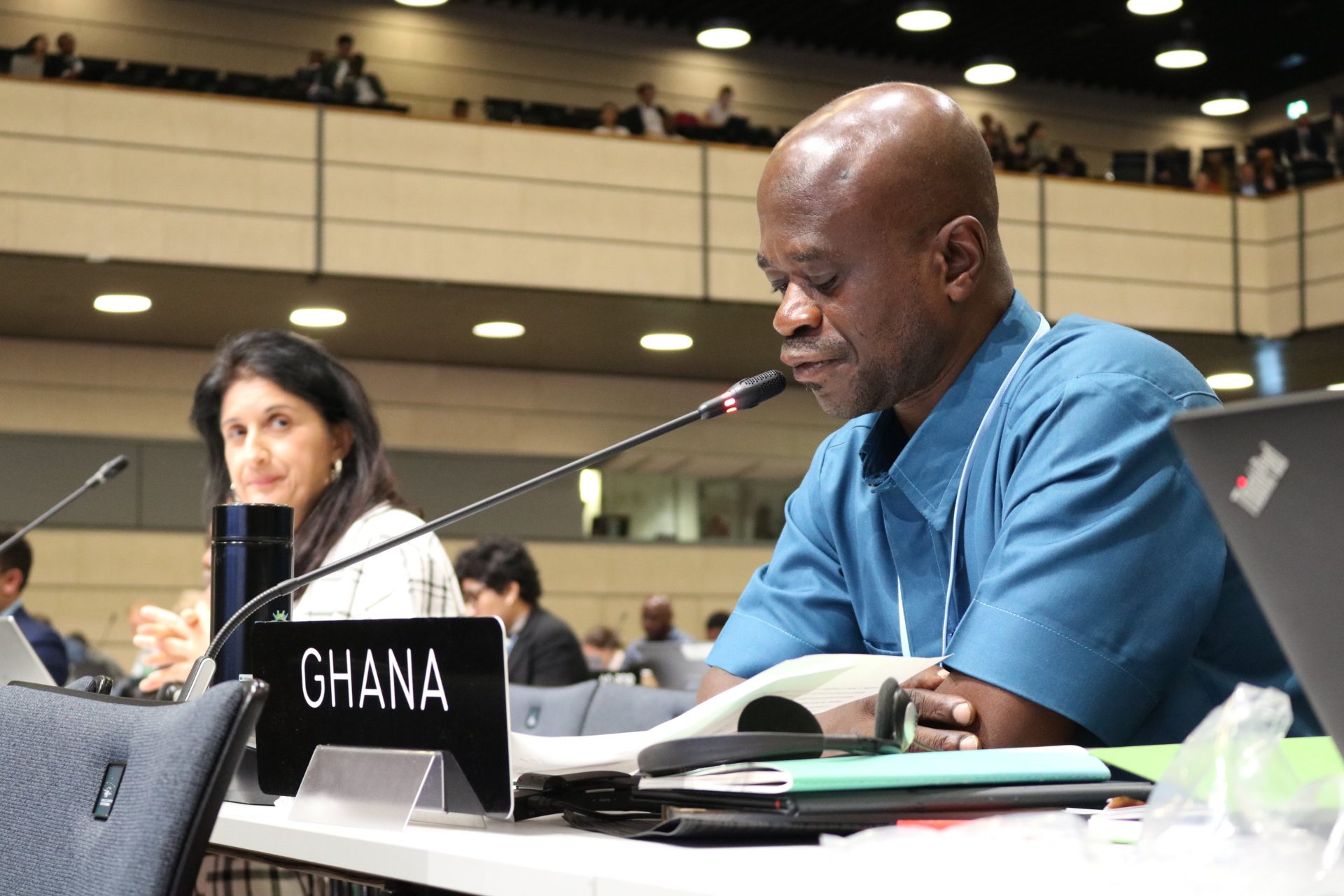
The Bonn Climate Talks happen annually mid-year, led by the scientific and technical arms of the UNFCCC. They are where countries substantively negotiate the technical points that ultimately make their way to the COP at the end of the year. This year’s talks, known as SB64, held between 8-18 June, take place in the midst of a fragmented multilateral landscape populated with a number of parallel and at times, competing, initiatives, a rapidly shifting global order, heightened focus on energy and national security; and dwindling levels of climate finance.
A fragmented landscape
On fragmentation, the most recent and notable development is the Santa Marta Conference on Transitioning Away from Fossil Fuels, and its calls for the development of national and regional fossil fuel transition roadmaps. There is also the process initiated in the UN General Assembly last month, with the Secretary General instructed to compile a report on how to advance compliance with the International Court of Justice’s advisory opinion on States’ legal obligations in relation to climate change.
Alongside this are the climate and trade talks at the WTO, and the newly minted and independent Integrated Forum on Climate Change and Trade, the climate and health challenges discussed at the WHO, and net zero discussed within the International Maritime organisation, topped off with “roadmaps” for climate finance, deforestation and fossil fuel transitions developed by the COP Presidencies. It is no wonder that when SB64 opened yesterday, it was anticipated that climate “adjacent” already agreed initiatives or ones that run in parallel to the COP would play a highly influential roleat the talks and its outcomes.
While these parallel processes can build much needed momentum, they risk fragmenting the multilateral party led efforts under the UNFCCC. Recently, at a press event, in response to a question about the Santa Marta conference, the current AGN Chair, Nana Dr. Antwi-Boasiako Amoah, recognised that there was appetite among some African countries to have discussions, but he also recognised that any actions done outside of the UNFCCC that are projected to be incorporated into those talks can create difficulties, particularly when it is done selectively.
Earlier last week, the AGN Chair, also underscored the importance of maintaining the integrity of the climate multilateral process and supporting implementation of existing decisions, stating that “the Secretariat’s Work must remain firmly anchored in mandates agreed by Parties. Our priority should be implementing decisions already adopted and delivering results for vulnerable communities. A strong UNFCCC process depends on preserving its party driven character, transparency and trust.”
Climate Finance
According to Amoah, the AGN is also prioritising finance, just transitions and trade, adaptation and loss and damage at SB64. In respect of finance, the Chair highlighted the need to work against efforts to weaken Article 9.1 of the Paris Agreement, which places an obligation on developed countries to provide finance to developing countries. “It is not charity, as we say every day, it is a legal obligation under the convention under the Convention and Paris agreement to support adaptation, mitigation, loss and damage and climate resilient development” he said.
Last year countries agreed to create a new Work Programme on Article 9 of the Paris Agreement, which relates to climate finance, including discussions on Article 9.1 (which relates to the duty of developed countries to provide climate finance to developing countries). The programme creates the much needed space for negotiators to bring together the various climate finance debates that have hitherto been scattered across other agenda items. Parties will now need to agree on a work plan for the programme, including what it must achieve and focus on.
In this context, the AGN is desirous of focusing on the obligations of developed countries and whether they have met their finance commitments. As Amoah pointed out, “the conversation is now shifting towards private finance” and is moving from Article 9.1 to other provisions in the Paris Agreement (such as Articles 9.2 – 9.4) that focus on mobilising other sources of finance and which encourage other developing countries to contribute. For example, Switzerland is looking for a discussion about expanding the donor base. According to the AGN chair: “it is about narratives and it is about time we let the rest of the world know it is not about charity, it is an obligation they must honour”.
A concern of the AGN is, however, that climate finance is not yet a core negotiation item. At present, it is a work programme with co-chairs being appointed. According to the Chair, it needs to be ensured that the initial conversations on it are structured properly, to ensure that it becomes a dedicated agenda item going into COP31 to enable a meaningful discussion on climate finance. Reportedly over the weekend, the G77 + China echoed this sentiment and sent a letter insisting that the work programme be a COP31 agenda item, and be driven by governments with concrete outcomes.
The G77 + China has also previously advocated for the climate finance work programme to address challenges with how developed countries report on the finance they have provided, calling for more clarity on the quantity, quality and project-based funds they have given. They also want to have a burden sharing arrangement, e.g. for countries to agree between themselves who will provide what portion of the overall financial target.
Just Transition Mechanism
Last year, at COP30, countries agreed to establish a Just Transition Mechanism, to support international cooperation, technical assistance, knowledge-sharing, and capacity building. In Bonn negotiators are likely to work on a draft decision setting out how this mechanism will operate in practice.
Speaking on this development, Amoah stressed that Africa supports a Just Transition that creates jobs, expands energy access, strengthens industrialisation and enables sustainable development. He underscored that the transition “cannot be another burden on developing countries, it must be supported by finance, technology development and transfer, and policy space that allows countries to pursue development pathways consistent with their national circumstances and development priorities.” In their written submissions on the Work Programme, the AGN stressed that it should “recognise Africa’s unique starting points”, and that local and green industrialisation, critical minerals, energy sovereignty and universal energy access, fiscal space and debt burdens were a central component to this.
In this way, many of the key development challenges of the continent fit within these discussions and they will rightfully remain a priority for the African group. To operationalise it the AGN has suggested that the Mechanism sit under the body that governs the Paris Agreement (the CMA), supported by a Just Transition Advisory Body under the CMA to give country driven guidance, oversight, and legitimacy. Its role would be important – it could signal to the CMA where finance or support shortfalls are occurring, providing a further level of accountability, and give guidance on any future dedicated finance arrangements for just transitions.
In addition, the AGN has proposed a technical tier that would focus on implementation by working to strengthen the international cooperation architecture and coordinate action between various actors. One example of how the Just Transition Mechanism could work would be to give guidance to the UNFCCC’s finance arms (e.g. the GCF) on how to integrate equity and just transition considerations into their strategies, investment criteria and operations, which could also be cross applied to other international financial institutions. It could also give guidance on the adequacy of existing and new finance channels to meet the just transition needs of countries.
On equitable transitions and in relation to fossil fuels more specifically, the AGN chair highlighted that there is no universal African political position, but rather common understandings, and agreement on the importance of the discussion. At issue is that the continent needs reliable and affordable fuel to be able to develop and accordingly Africa must be able to have the development space to transition to a greener regime. What it means is that the treatment for the continent should not be equal to developed countries, said Amoah. “If we are going to transition, we need to do it more equitably, so that the continent will not suffer the consequences. We need to industrialise, we need to develop, we need to provide jobs for the young population”, he said.
Trade
Trade and climate issues are expected to feature more prominently in this year’s discussions, following the global rise of industrial policies and carbon border adjustment mechanisms with profound trade implications, together with a highly volatile broader tariff environment. Ahead of the talks, the AGN highlighted its discomfort with unilateral trade actions that risk creating barriers to trade, development and industrialisation in developing countries. The group has pointed out that such tools cannot be a tool for protectionism, and that there is a need for more cooperation in this space.
Last year at COP30, Brazil introduced the Integrated Forum on Climate Change and Trade (IFCCT), in an effort to bridge the divide between the discussions on trade and climate in the UNFCCC and WTO. In addition, SB64 discussions in Bonn will host the first of the three technical dialogues on trade and climate, also agreed to at COP30, to build trust and connect the sectors, with a view to creating practical forms of cooperation. Ultimately these forums will need to align with each other and other discussions at the COP and the WTO to avoid further fragmentation in this space.
Adaptation
Adaptation will remain one of the most politically important pillars of this year’s discussions. The AGN is looking to maintain its focus on adaptation at SB64, stressing that it is not optional but a matter of survival for African countries. In this context, the African group is looking for meaningful progress on the Global Goal on Adaptation (GGA), the United Arab Emirates Framework for Global Climate Resilience, the Baku Adaptation Roadmap and the Belém-Addis Vision in advancing the implementation of the GGA. The group wants to ensure that adaptation receives the attention, institutional support and finance it needs.
At SB64, countries will be discussing how to take forward the approximately 60 indicators agreed to last year, but which were highly contested and difficult to operationalise. Countries will discuss how to refine them, and related methodologies, to support reporting and accountability processes.
In relation to agriculture, the AGN also underscored the importance of reaching agreement on the second phase of the Sharm el-Sheikh agricultural “joint work” created in 2022, which is due to end at COP31, highlighting its role as an important space for agriculture and its high relevance to the continent. Agriculture is not only relevant to adaptation but also to emissions, and is a highly sensitive and lobbied issue at the negotiations.
Loss and Damage
Another priority of the AGN is to ensure adequate support for loss and damage. As the chair pointed out, the Fund for Responding to Loss and Damage (FRLD) is a significant achievement, but remains poorly capitalised. As of March this year, only $822 million has officially been pledged, with some of these amounts yet to be transferred to the fund. The AGN will continue to advocate for more funding pledges to be made and honoured, in the form of grant and highly concessional funding that is easily accessible by impacted communities.
We will continue to monitor and report on developments at SB64 as they arise. Are you there and would like to share your thoughts? Let us know in an email or via social media.