There has been no shortage of meetings over the past decade geared at motivating governments to reduce their dependence on fossil fuels. The conference on transitioning away from fossil fuels held in Santa Marta, Colombia in late April, however, was the first expressly dedicated to this issue. Many hoped it would provide a surrogate or at least shake up the inertia in the Paris Agreement and UNFCCC COPs.
Co-hosted by Colombia and the Netherlands, the conference was announced at COP30. That COP was mired by an inability by the Brazilian Presidency to find any agreement on including fossil fuels within the plenary decision, prompting Brazil to propose an alternative voluntary voluntary roadmap, an initiative that was backed by about 80 countries. It had also developed the Belém Declaration on transitioning away from fossil fuels, which only 24 countries signed.
The Santa Marta conference came at an exceptionally challenging economic and political time, mired by rising oil prices, unstable supply and high levels of energy uncertainty, one of the worst energy crises in history. From the beginning it was not clear what the conference outcomes would be and there was some talk that it would possibly offer up an alternative Treaty (following the long debated Fossil Fuel Treaty initiative). The vision being that, by excluding oil producing and other obstructive states, there would be a clearer pathway to negotiate a more ambitious legally binding course of action. Efforts on whether to focus on a new treaty or strengthen the UNFCCC COP outcomes have been in tension over the past few years, with concerns that it might further fragment or weaken the existing regime. Those in support of a new treaty argue it could not get any weaker.
The conference abandoned the treaty option. Instead, it cemented a coalition of the willing made up of 57 States. Representing more than half of global GDP, a third of the world’s population and fifth of international fossil fuel production, together with more than 2,600 civil society and community organizations, the collaboration could see slight shifts in how blocs negotiate at the COPs or at least more unity on how fossil fuels are treated in the outcome texts, an issue that has been evasive since COP28 when they were last mentioned.
The outcome document prepared by the conference chairs is based on three workstreams. The first is to develop comprehensive national and regional transition roadmaps which are to be incorporated into NDCs. The second focuses on aligning cross-border trade policies, hearkening back to long debated discussions around climate clubs and how the trade regime could be leveraged to reduce fossil fuel dependencies. And the third focuses on the financial architecture, including fiscal, subsidy, and debt traps that undermine the transition. The Brazilian COP30 presidency promised that its “informal” fossil-fuel roadmap, would draw on the above, and it is likely to incorporate these workstreams to some degree.
African Participation
Where Africa fits into this picture remains unclear. The continent has always been express that, because of its extreme vulnerability to climate change, it supports high levels of mitigation ambition, with developed countries taking the lead. But it has been more ambivalent about dedicated roadmaps and transition plans. In the final plenaries of last year, AGN negotiators lamented the focus on mitigation roadmaps, and the targeting of any sector such as the energy sector, calling for any roadmap to include adaptation and finance as well. On the other hand the LDC Group, which is mostly comprised of least developed African states, supported a roadmap towards 1.5°C – although the group did not mention fossil fuels directly.
At the time, a hotly disputed list of around 82 countries that supposedly supported a fossil fuel transition roadmap only included Cabo Verde, Guinea-Bissau, Kenya, Mauritius, Sierra Leone and Mauritius and Tonga. This was apparently why at COP30 the Brazilian Presidency said it was unable to include the Roadmap within the decision because there were “80 for and 80 against” it. One of the “swing” groups was reportedly the Africa Group, or AGN, with the Guardianreporting that the then Tanzanian AGN chair, Richard Muyungi, had told a closed meeting that all its 54 members aligned with the 22-member Arab Group on the issue. This was reportedly not fully accurate as some African states supported the development of a roadmap.
Understandably, the diversity of emissions profiles within Africa means that it may not have a unified or uniform view on the issue and explains why the group has always supported differentiated pathways. For example, Nigeria was reportedly vocally against a roadmap during closed door sessions at COP30, but in the final plenary, it stressed that “the transition away from fossil fuels should be conducted in a nationally determined way, respecting [common but differentiated responsibilities and respective capabilities”.
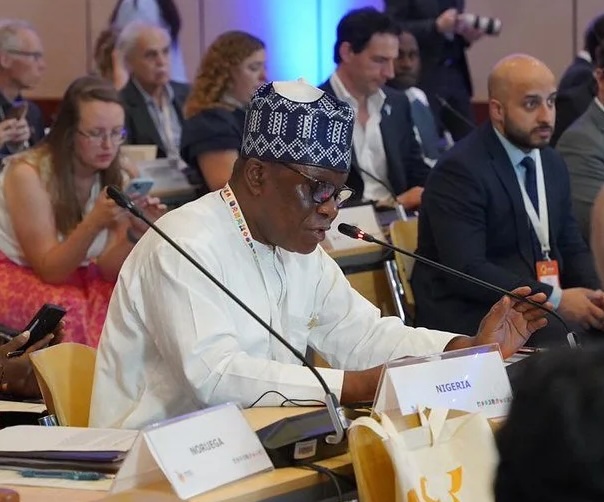
The attendance of several prominent African states at Santa Marta last month, however, demonstrates a willingness to take express actions to address fossil fuel reliance. Angola, Cameroon, Ghana, Kenya, Malawi, Nigeria, Senegal, Tanzania, Uganda were all in attendance.
But participation around the event was opaque as it was by invitation only, and it is unclear to what extent other African countries would have wanted to attend but were simply not invited.** State representatives and observers had mixed views on whether excluding some countries from the conference was the correct approach. Panama’s special representative on climate change told journalists that it was the “right decision”, arguing that “this first meeting had to be done with those that wanted something to be done. Otherwise it would have been a repeat of a UNFCCC meeting.”
Director of Colombia’s Environmental Agency, Irene Vélez Torres, defended the decision not to invite China, Russia and the US, indicating that they had failed to show the requisite spirit to be part of a coalition of the willing.
At Santa Marta the first to speak at the plenary was Nigeria’s Minister of Regional Development, Abubakar Momoh, who confirmed that the country was “actively diversifying its economy away from extracting oil, which accounts for around 80% of our exports”. Nigeria strongly believes that it’s not whether extraction should decline, but how to organise it so that it is manageable, fair and politically viable across countries.” It also called for methane to be addressed when planning for long term transition proceeds.
Ghana, which had previously not been a vocal proponent of a fossil fuel treaty, noted that fossil fuels remain deeply tied to national revenues which fund essential services, and it called for a fossil fuel treaty to create the architecture for a just transition. Malawi was also reportedly in favour. Nigeria was, however, less supportive of fragmentation, arguing that transitioning away from fossil fuels should not be a parallel process to the UNFCCC.
This issue turned out to be one of the biggest points of divergence at the conference. Civil society supported a separate treaty, but many governments were less enthusiastic, arguing that a treaty would take too long to negotiate, could undermine the UNFCCC and Paris Agreement and could turn producing governments away from the process of transitioning from fossil fuels. For less developed countries, the proliferation of reporting requirements under the Rio treaties is also a concern, with many unable to keep up and also attend all the meetings. A further treaty only complicates the landscape.
What it did not achieve by way of legal text, it made up for in spirit. Speaking to Earth Negotiations Bulletin, one COP veteran said “This conference has been incredibly inspiring. Seeing countries debate issues that have long been unspeakable within the UNFCCC is a strong signal to the rest of the world that the transition is inevitable.” Its open and inclusive format, many felt, facilitated a more honest discussion on the levels of reliance on fossil fuels, the opacity of subsidies, and the chilling effect of Investor State Dispute Settlement mechanisms in trade agreements.
Outcomes
The organisers intend to build on this momentum over the next year working towards a second conference on transitioning away from fossil fuels that will take place in Tuvalu, co-hosted by it and Ireland. Efforts will be organised into three workstreams:
- Collaboration to build transitioning from fossil fuel roadmaps, including for fossil fuel producing countries, The roadmaps are encouraged to have clear timelines and policies and measures to transition, and to then be integrated or “connected” with NDCs. Vélez Torres emphasised that they must be “very clear and honest” about “emissions exported from producing countries”. It is this element that is seen to distinguish roadmaps from NDCs which do not ordinarily include exported emissions.
This raises questions about how and where to draw the line of NDCs between supply measures and demand measures. However, it does offer an avenue to hold producing states more accountable and drive transparency. It remains unclear how these additional roadmaps would be possible for many African states though, including fossil fuel exporters, who historically have struggled to develop, update and implement even their NDCs, arguing they lacked means and financial support to do so. One of the roles of the new science panel (see below) is to support states to develop these, but critical will be how the panel is funded and the level of autonomy and capacity States have to steer this process.
- The second workstream focuses on trade decarbonization by fossil fuel-exporting countries, supported by the OECD. One discussion included the development of a “fossil fuel-free trade system” that could include a club of buyers and sellers that design green trade systems to replace trade in fossil fuel. The idea of a carbon club has long been around (where club members use carbon pricing as a gateway to gain access to preferential trade treatment), however the club discussed in Santa Marta has less negative side effects, by seeking to create trade relationships to phase down fossil fuels through other relationships and green trades, to avoid exporter countries losing out on much needed fossil fuel revenues.
- The third focuses on the financial system and will include work to identify fossil-fuel subsidies and find solutions to “debt traps”. It will be supported by the International Institute for Sustainable Development. There was a common call for fossil fuel subsidy inventories.
- Transparency is a cross- cutting component, for all of the above. As part of this, Dutch climate minister van Veldhoven indicated that all countries would be invited by email to begin a process to identify and report their fossil fuel subsidies (notably the WTO also has a parallel workstream on this issue).
To counter false narratives on climate science, the group created a dedicated scientific panel to inform and support this process. Its work will be to build on the existing science on fossil fuels and its effects, and in doing so will hopefully attract further countries to the discussion table and ideally be an opportunity to engage more scientists from the Global South. Its development follows frustrations with the IPCC, the line-by-line negotiations and vetoes that underpin the headlines and summaries for policymakers, and the feeling that the science is being infiltrated and influenced through the pressures of petro-states.
Comment
Reflecting on the meeting, while its outcomes are not revolutionary, they are at least refreshing, as was the format and ease of negotiations. The transitioning roadmaps sound attractive but may face challenges in African countries which are already hard pressed to develop NDCs, let alone another roadmap. Potentially the group could crowd in other bigger exporters, but this instrument alone appears, like its NDC predecessors, ill-fated to really move the needle.
A better and possibly more effective outcome might be the trade discussions, with green trade as substitute for fossil fuel export revenue likely being more productive avenue to follow. But again, finding a proper home for this engagement will be critical, be it the trade talks being convened under the COP, the Integrated Forum on Climate and Trade, or the WTO Trade and Environmental Sustainability Structured Discussions. Lastly, the finance discussions, although not new, are welcome and timely, and set the tone of what can and should be discussed in the Article 9 Work Programme under the Paris Agreement, the second Global Stocktake, the World Bank and IMF meetings and the UNGA.
Another important feature is that the group could possibly act as a “coalition of coalitions”, being an umbrella of other coalition like BOGA and Powering Past Coal Alliance. It could do so through its steering committee, made up of countries that lead existing coalitions and incoming and outgoing conference co-chairs, possibly reducing fragmentation and overlap between them, and creating more coherency in messaging and action items.
The lack of any agreement on a Treaty is disappointing, although Pacific Island states are likely to continue to drive an agenda in support of it. The concerns about fragmenting or undermining the Paris Agreement and UNFCCC are warranted but also overlook the fact that these treaties are rendered lame by their consensus driven process, and only propped up by the Action Agenda. It may be that after so much political and financial investment into that system, countries simply cannot bear to part with it, but it is unable to deliver on its core mandate of climate finance, adaptation support and mitigation. At this point it looks like only novel trade mechanisms discussed at Santa Marta, if designed in an equitable non-punitive way, can bridge the gap in a highly volatile political, economic and trade environment.
** Note: the AGN was invited to comment on the group’s attendance at the event but had not yet responded at the time of writing.