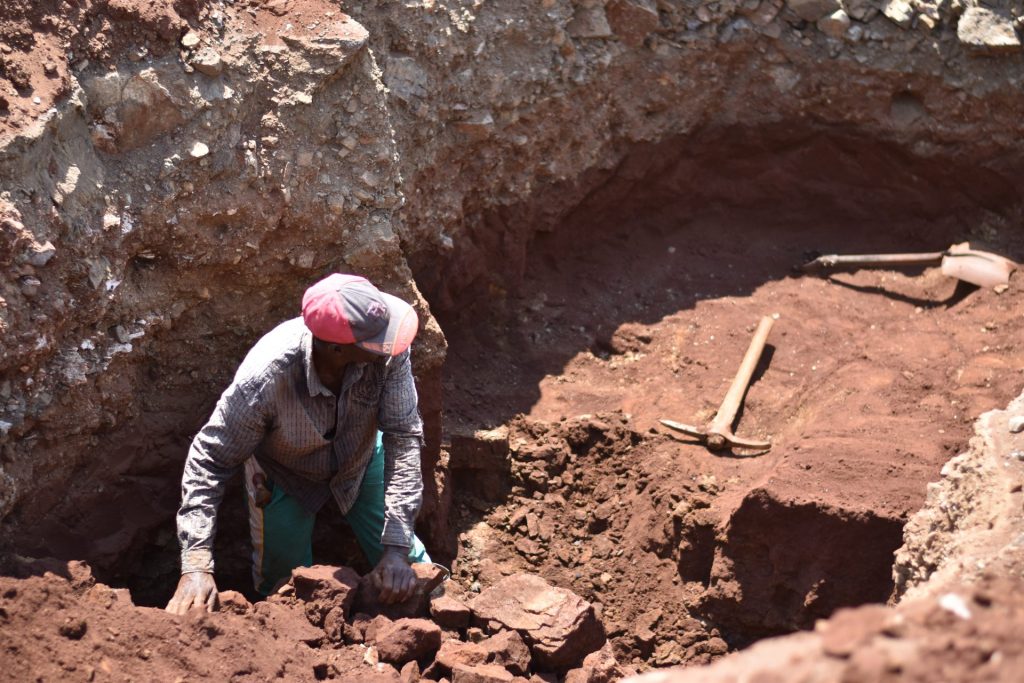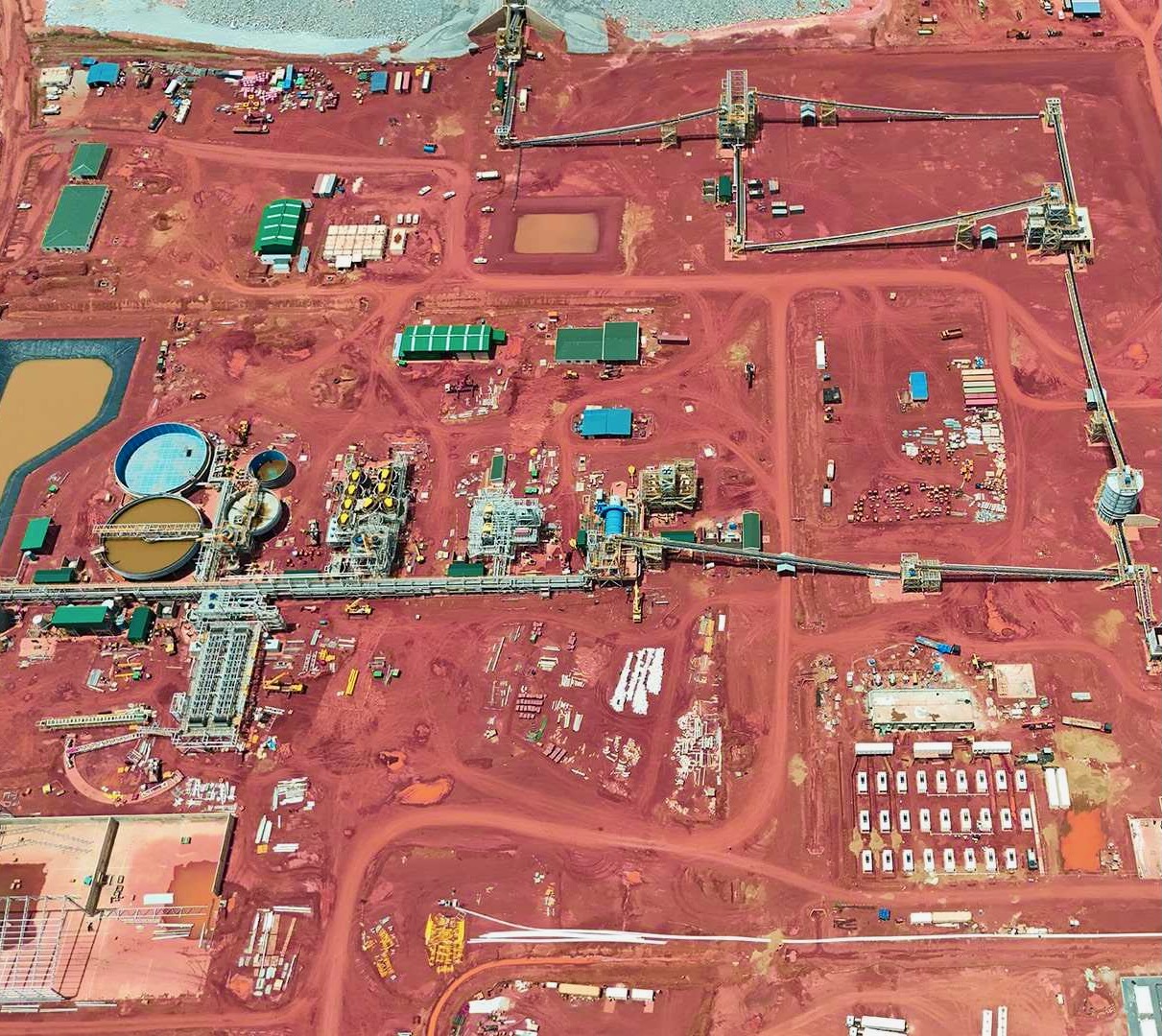
The Africa Finance Corporation, doubling down on its messaging for Africa to find domestic resources to process its minerals, has recently launched a US$1.3billion deal to build an alumina refinery plant in Nigeria, and support mineral exploration in several mineral value chains in the country, projected to contribute US$25 billion to the economy over its lifespan. In Ghana, this year the Mineral Income Investment Fund aims to investin mid-to-large scale or near-term critical mineral projects. In Mali, the recent deal between the government and the operators of Goulamina lithium mine, has seen the government raise its share of ownership in the mine to 30%with an additional 5% for local investors, in a bid to drive up local ownership and investment in the value chain. Guinea’s recent Simandou bauxite project, with its proceeds expected to anchor the country’s first sovereign wealth fund, will also be expected to play a critical role in the market for gallium – a mineral necessary for semiconductors, advanced microelectronics and other technology applications.
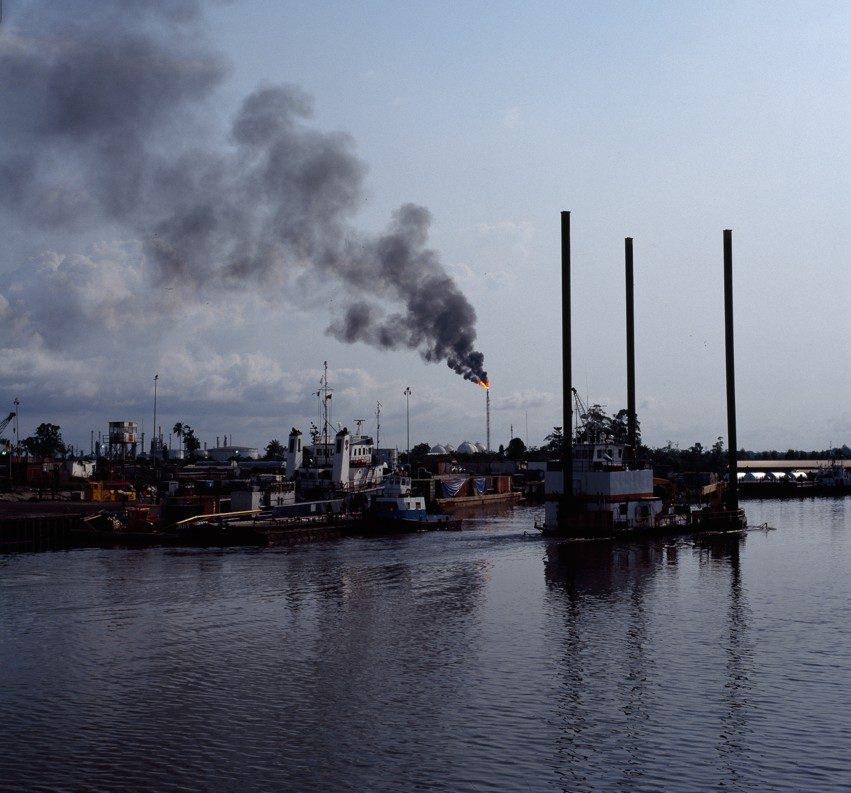
These new commitments across West Africa’s critical mineral value chains, signal a significant expansion in production capacity, which carries implications for industrial GHG emissions, if not carefully managed. As these projects ramp up output to meet global demand for lithium, gallium and bauxite, the accompanying energy-intensive processing stages will require dedicated decarbonization strategies to prevent locking in high-emission infrastructure.
This places technology transfer and climate finance at the centre of the region’s industrialisation agenda, as retrofitting existing operations and designing new mines with clean energy integration, electrified haulage, and efficient processing technologies will require significant capital investments. As a result, green finance mechanisms become essential for West Africa to avoid simply replicating carbon-intensive value chains.
Decarbonizing mining value chain – a value add paradigm
Emissions from the mineral value chain can generally be understood by assessing the full carbon footprintunder the Green House Gas protocol. The latter categorises emissions as either scope 1, 2, or 3. By their structure, scope 1 and scope 2 emissions are more direct and within the control of the emitter, and can usually be navigated with the right technology, reform, renewable energy and energy efficient systems. Scope 3 on the other hand, occur within a company or a mining project’s entire value chain including downstream activities. From purchases of goods and services through the use of downstream transport and distribution, to downstream leased assets and energy and fuel used across the value chain, Scope 3 emissions are complexto calculate.
This inability results in a framing of a choice between environmental sustainability and the pursuit of green growth – a false dichotomy, which could alienate both investors and regional governments. Interpreting value addition narrowly as converting ore to metal without regard to emissions intensity, will result in the potential lock-in of carbon-intensive infrastructure that will become uncompetitive under evolving carbon border mechanisms and ESG driven capital and finance allocation.
In the alternative, structuring projects from the outset to integrate clean energy (such as Cote d’Ivoire’s PIRME policy which aims to combine projects with cross-border renewable energy – to increase renewable energy to 45%), adopt efficient processing technologies and align with harmonized environmental standards, the region can position itself to attract concessional green finance and patient capital.
Rewriting the risk equation and the role of catalytic capital in green industrialisation
The developments in the region point to the reality that, the private sector alone will not shoulder the upfront cost of decarbonising these value chains. As a result, finance cannot be met through traditional debt or equity instruments alone, chiefly due to the green premium, that makes first mover projects appear riskier to commercial financiers.
Concessional capital and first loss structures can help reduce some of these risks. Primarily provided by DFI’s and MDBs, these instruments absorb the initial losses if projects underperform, creating a cushion for commercial capital, and transforming high risk projects into investment grade opportunities. It means that energy investments – heat and electricity, must increase dramatically across the region.
This approach rests on three fundamental pillars – investors must adapt targets to geographies, given the diversity in carbon footprint abatement capacities in the region; unlocking innovative structures that blend public and private capital to lower costs for clean energy developers; and deliberate strategies to consider unexplored asset classes including green impact plans with additionality (such as emerging market green bonds), green private financing for innovation, and renewable energy infrastructure.
In other areas, off-balance sheet instruments like project finance can accelerate clean energy pipelines, particularly as IRENA finds that 21% of a large sample of institutional investors already hold renewable energy funds or direct project stakes. To this end, the work of several DFI’s in aid of new energy – heat and electricity solutions, in the breakthrough energy portfolio, are good examples of alternative technologies to decarbonize the value chain.
Leapfrogging the carbon trap – owning technology as a resource
To truly decarbonize, West Africa must move beyond simply hosting foreign built equipment and instead secure the breakthrough technologies that will define competitive, low carbon mineral processing. Using Nigeria alumina refinery and Guinea’s Simandou bauxite (gallium) production as examples, it would mean integrating innovations such as inert anodes for aluminium smelting (which eliminate direct process emissions), direct lithium extraction for more efficient and less land-intensive lithium recovery. It could also include the deployment of electrified mining fleets powered by renewable energy, as seen in recent projects in precious minerals value chains across the continent, particularly in Southern Africa.
Achieving this, however requires a fundamental shift in how finance agreements are structured. Finance deals must embed mandatory technology transfer and local skills development clauses, ensuring that countries not only host processing infrastructure, but also acquire the operational know-how and maintenance capacity to sustain it. In this way the region can transform from a passive recipient of imported solutions into a builder of long term self-sufficient industrial capability.
Social contract as the missing risk metric
Ultimately securing finance for West Africa’s decarbonized mineral value chains demands more than capital and technology. It requires a new social contract that ensures the region’s mineral wealth translates into tangible, widely shared benefits. Mali’s recent move to raise state ownership in the Goulamina lithium mine to 30%, alongside the 5% allocation for local investors, and Guinea’s channelling of Simandou revenues into a sovereign wealth fund, should be understood not merely as fiscal mechanisms, but as foundational instruments for economic diversification, human capital development, and a just transition for mining communities. When local populations see that revenues from decarbonized processing are re-invested in education, infrastructure and sustainable livelihoods, public support for capital – intensive, long-term projects solidifies, mitigating the political risk that often deters institutional investors. Without such demonstrable local dividends, the very finance the region seeks to attract becomes vulnerable to social unrest and policy reversals, undermining the stability required to build enduring green industrial capacity.