Kenya has been well known for its pro carbon market stance and support for high integrity credits. So it came as some surprise to the market that KOKO Networks, a clean cooking start-up with over 1 million Kenyan beneficiaries, had closed. The failure of the project to obtain a long awaited authorisation to transfer carbon credits internationally under Article 6.2. has renewed debate on Kenya’s interest in or ability to implement these types of international transfers, and the sustainability of carbon finance in scaling clean cooking solutions. While the precise reasons for closure have not been formally disclosed, public reporting has suggested challenges with international carbon market access.
KOKO Networks’ business model
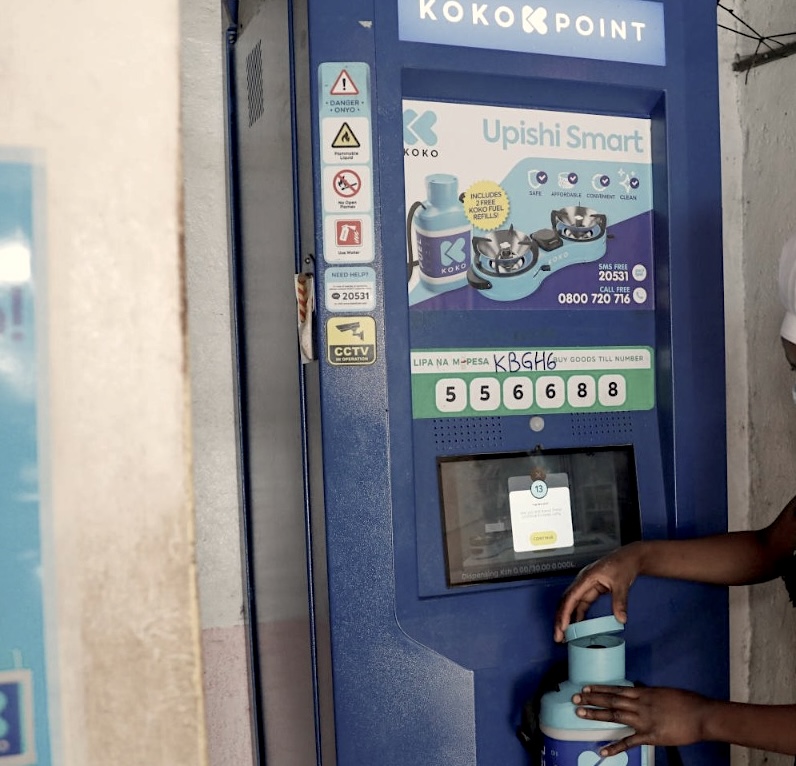
Launched in Kenya in 2019, KOKO’s business model was built around the sale of clean bioethanol fuel made from sugarcane byproducts, alongside cooking hardware sold at subsidised rates: approximately 50% of the market price for fuel and 80% for stoves. The entirety of subsidies was financed through revenues from the sale of carbon credits. The company served over 1.3 million households through a network of around 3,000 automated fuel dispensers located in neighbourhood shops. KOKO had invested over US$300 million in the national delivery system and had received over US$100 million in debt and equity funding from investors.
Carbon credit generation and access to compliance markets
KOKO generated an estimated six million tons of credits annually under the highly reputable Gold Standard using an approved United Nations methodology. This certification enabled KOKO to seek higher-value compliance markets, particularly airline buyers participating in the Carbon Offsetting and Reduction Scheme (CORSIA) administered by the International Civil Aviation Organization. To access compliance markets under Article 6.2 of the Paris Agreement, developers need a Letter of Authorisation issued by the host country. To avoid double counting their emissions, the host country must also adjust its emissions balance. This means that host states cannot count the reductions towards their emissions targets and must consider requests carefully and in a much wider context. This requirement also introduces a critical regulatory dependency.
To mitigate political and regulatory risks, KOKO secured a US$179.6 million guarantee from the World Bank’s Multilateral Investment Guarantee Agency (MIGA) covering upstream risks not covered by traditional business insurance. This particular guarantee covered risks including expropriation, war and civil disturbance, transfer restriction, and breach of contract for 15 years. While it de-risked the investment, it is debatable whether it covered risks associated with regulatory approvals.
What Went Wrong
Published last year, Kenya’s Carbon Markets Regulations establish the legal framework for, among other things, obtaining the necessary consents and approvals under Article 6. One such consent is a Letter of Authorisation from the country’s Designated National Authority for the project to transfer its credits for use by other countries in achieving their Paris Agreement mitigation targets or CORSIA under Article 6.2.
Despite Kenya’s stated support for Article 6 markets, however, the Letter of Authorisation had not arrived by last weekend, forcing KOKO to close its doors. Reports suggest that KOKO experienced difficulties in obtaining the letter, but reasons for the delay were not publicised. This situation also exposes Kenya to a contingent liability of up to US$179.6 million should the MIGA guarantee be called, at a time when fiscal space remains highly constrained. This raises a deeper question: how can climate finance be structured when regulatory approvals required to monetise revenues may only be granted or withheld late in a project’s lifecycle?
What the regulatory scheme should have provided (but did not) is an early indicator of support for the credits to be transferred out of the country. The legal regime already does so in the context of overall project approvals, through the Letter of No Objection, as a non-binding document confirming no opposition to the project. This is commonly used in infrastructure finance to demonstrate political consent. However, what it does not do is extend far enough to include consent for the transfer of carbon credits internationally. KOKO was caught in the crossfires of a new legal regime from 2024 which required it as an existing operation to still get a letter of no objection and approval, as well as separate authorisation for transfer of its credits internationally. This raises the question of how it was able to secure the US$179.6m political risk insurance guarantee from MIGA during this regulatory transition. Moreover, under the carbon markets regulations, the issuance of such a Letter of Authorisation is discretionary and not subject to a closed or exhaustively defined set of refusal grounds, underscoring the degree of sovereign discretion over access to international carbon markets.
This sequencing gap between political consent sufficient to mobilise capital and the regulatory authorisation required to monetise carbon revenues is what led to the project’s undoing.
Implications for carbon finance and clean cooking
The decision to close KOKO will have palpable impacts. The venture directly employed over 700 people, sustaining thousands of retail agents. KOKO was serving over 1.3 million customers, in a national context where 68.5% of the population or 9.1 million households depend on traditional fuels for cooking. In this context, KOKO’s closure is likely to have widespread impacts for low income families. Their bioethanol fuel was significantly below the effective per-use cost of Liquefied Petroleum Gas (LPG) which is the most popular clean cooking solution in Kenya. Additionally, KOKO’s pay-as-you-go model was explicitly designed around the cash-flow realities of low-income households, enabling customers to purchase fuel refills at as little as Kshs.30 (US$0.23) at a time.
The case also raises a broader policy question for Kenya and other African countries about the role of carbon finance in sustaining consumer-facing clean cooking solutions. Clean cooking markets remain structurally dependent on subsidies, yet in contexts where governments face binding fiscal constraints and are unable to provide direct support. With clean cooking receiving limited budgetary prioritisation, carbon finance has increasingly been positioned as an alternative mechanism to close the affordability gap. KOKO’s closure will also likely dampen the market and raise red flags for other clean cooking carbon projects operating in Kenya. It erodes investor confidence and exposes the structural risk inherent with carbon projects where they are often solely reliant on revenues from carbon credits, the issue, sale and transfer of which is contingent on multiple factors.
The KOKO example presents a compelling case for structured engagement between government, industry players and financiers to address these constraints, and to finetune the Article 6 process.
Policy Implications
The case illustrates the need for an early-stage indication from the government on whether they would support an Article 6.2 transfer. Ideally it would set out in-principle approval, subject to any clearly defined conditions to be satisfied prior to the issuance of the final Letter of Authorisation. This would guide project preparation and structuring, improve regulatory clarity and reduce late-stage sovereign risk for projects whose financial viability depends on access to specific international carbon markets.
Further, if Kenya is to meaningfully pursue its universal clean cooking agenda, it will need to reconsider how it supports clean cooking projects on the ground. Clean cooking is a highly price-sensitive energy access sector, and affordability is a prerequisite for achieving universal clean cooking access.
While the Government of Kenya has put in place mechanisms (including the Clean Cooking Transition Strategy 2024-2028), taxation continues to be one of the main structural constraints to the uptake of clean cooking solutions. For instance, beyond some clean fuel VAT exemptions, there remain limited fiscal incentives targeting clean cooking technologies themselves, particularly the improved cookstoves. Targeted tax incentives for local manufacturing of clean cooking technologies could also be transformational, especially those proposed in the Draft Green Fiscal Incentives Policy Framework for appliances such as bioethanol, briquetter, pellet and biogas stoves.
Who bears the risk?
A final question raised by the KOKO case is whether carbon markets are being asked to perform a role they are not structurally designed to fulfil. The revenues from these credits is relatively uncertain and mediated by policy choices. Moreover, they can only be realised after verification and sovereign authorisation is complete. But questions remain on who bears the risk. In this case, the regulatory and policy risk has materialised at the sovereign level, but trickled down to private operators and ultimately end-users. This structure places risk upon consumer-facing businesses and low-income households, making the transition itself fragile.
The KOKO case highlights a central tension in today’s energy transition frameworks: they may be effective at mobilising capital, but far less reliable at sustaining essential services for those who depend on them
Cherop Soy is a Programs Officer and Winnierose Kosgei is a Climate Finance Advisor at Enzi Ijayo Africa Initiative, a Pan-African think-and-do tank focused on green energy solutions.