The outcomes of the Conference of Parties (COPs) of the UNFCCC are often criticised as political agreements that are full of good intentions, are open to interpretations, lacking in tools for meaningful change. It is not an exaggeration to state that for some commentators, while UNFCCC COPs have retained a universal character, their promise of working towards common purposes feels increasingly brittle to the point of COP sessions being at risk of detachment from the lived experiences of climate impacts.
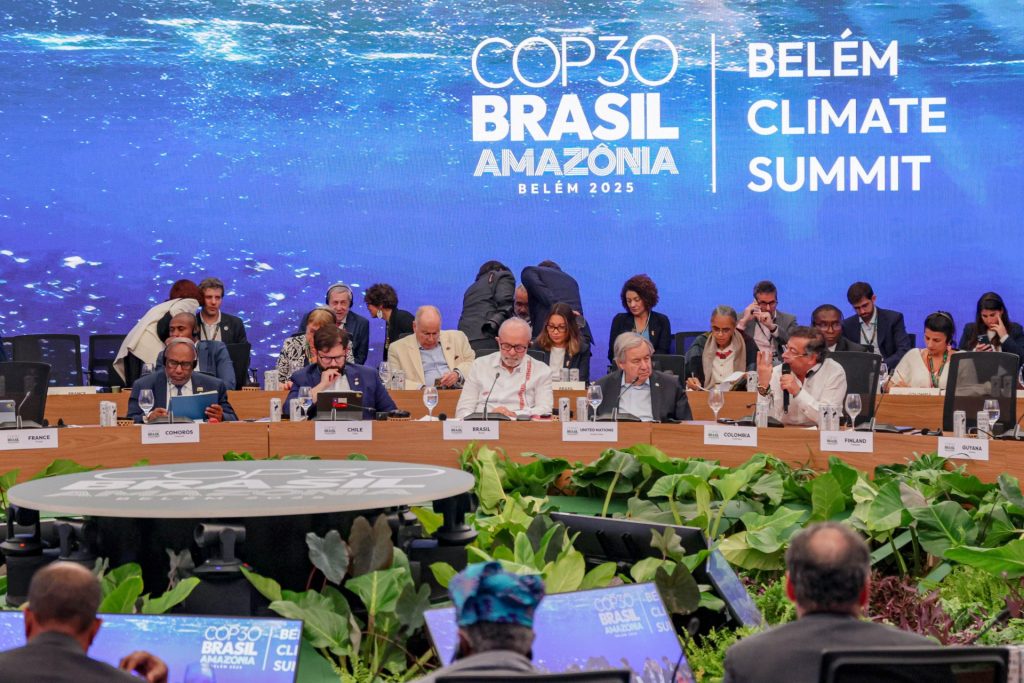
COP30 held in Belém, Brazil, took place at a time when climate multilateralism is characterised by fragmentation, a roll back of climate leadership, a fragile sense of shared purpose, and international climate coordination that is struggling to hold. For example, there was a not so implicit sub-text of the non-participation by the second largest emitter of greenhouse gas emissions, and the shift of politics of climate change away from being pigeon-holed as, being the West vs the rest.
Despite, and perhaps owing to this political context, the post-mortems of COP30 that I have read have differed markedly. Positive sentiments indicated that COP30 brought in a wave of ‘political realism’, COP30 ‘displayed the stakes rather than smooth over them’, COP30 signalled ‘a shift in the global climate agenda’, COP30 was a moment of ‘restructuring and refocusing’ and COP30 was a reset — the real world finally re-entered the negotiating halls. On the other hand, some commentators have labelled COP30 a failure, pointing to topics where agreement was not found and also to the COP’s final plenary.
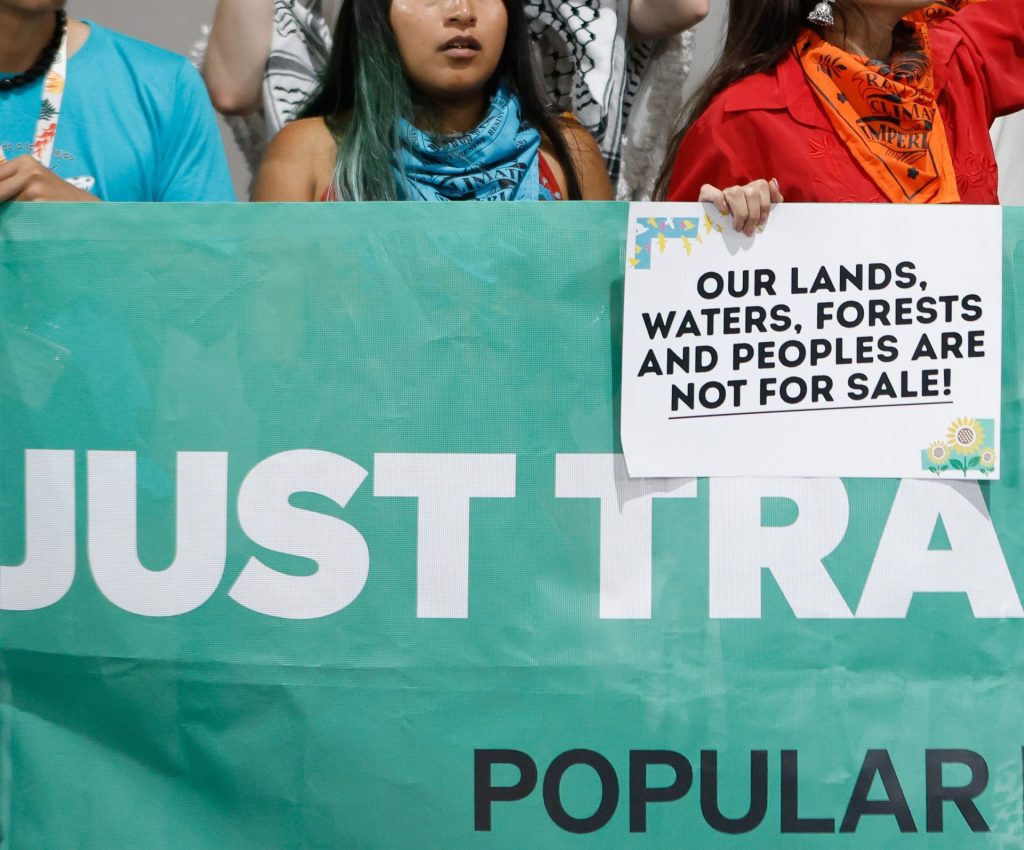
As the dust settles on the COP, I have tried to look beyond the headlines, beyond the key outcomes and implications for future COP sessions. Instead, I have focussed on the character of the UNFCCC COPs, remembering that in October 2022, I published a paper where I described the UNFCCC COP as containing three arenas. The first (the ‘Government COP’) is dominated by government officials and diplomats who are carrying out the actual textual negotiations that will form the formal outcome of the COP. The second (People’s COP) provides a platform for networking of civil society, academia, mayors of cities, executives of businesses, international organisations, etc. The third (Voice of Change COP) is characterised by street protests of the host city, highlighting lived realities of communities, attracting the attention of the international media.
There is now an emerging fourth arena of COPs. The Action Agenda. Formally known as a ‘Global Climate Action Agenda’. It is normally led by the hosting COP Presidency, sometimes in conjunction with the host of the previous year’s COP. Similar to the second arena (People’s COP) these Action Agendas are coordinated action by governments, the private sector, financial institutions, civil society, and Indigenous Peoples. In contrast to the second arena (People COP) which tends to have a backward-looking focus, for example the discussions frequently focus on results of on-going or recently completed projects or published literature, the Action Agenda has a forward-looking perspective, with a focus on commitments to take concrete actions in the following year and beyond.
The initiatives contained in these Global Climate Action Agendas have several defining characteristics. They are voluntary. They are global. They are multi-sectoral. Each initiative is undertaken across multiple countries, and the actions cover key social and economic systems, including energy, transport, agriculture and food, forests, infrastructure, finance, health, cities. Their emphasis is on practical delivery, and delivery at scale.
These Global Climate Action Agendas have a huge impact in the climate multi-lateral process. They indicate a decisive shift from design and commitments to real implementation, from aspiration to action and demonstrate the translation of pledges into measurable results with tangible benefits for people, nature, and economies. As such, I refer to this fourth arena as the ‘Implementation Arena’.
Like previous recent COPs, the COP30 Action Agenda was structured around thematic axes which hosted various Activation Groups. These groups convened more than 480 initiatives into 117 “Plans to accelerate Solutions”, fostering coordination and collaboration between government and the public. This common framework supports the roll out of negotiated outcomes, such as the Global Stocktake and the recently agreed Global Implementation Accelerator.
While the Action Agenda unites many initiatives beyond the official negotiation process, it does not replace the formal negotiations (the Government COP). Rather, it strengthens the formal negotiations by demonstrating how to raise the ambition inside the UN process, through the mobilisation of the whole-of-society action. It is an arena where lived realities meet the UN multilateral system.
The reality is that while UNFCCC COPs command global attention, they have never floated above prevailing global politics. COPs are a tool of statecraft – with hosts turning these events into instruments of soft power, a platform on which to project a version of themselves, and a tool to court financial investments.
Ten years since the Paris Agreement, society will judge the COP process not on negotiated agreements, agreed plans, pledges and stated commitments, but on actual delivery. While the progress and breakthroughs in the formal negotiations depends on the extent of alignment of political interests, the Climate Action Agenda is emerging as another currency in the UNFCCC COPs: a currency that catalyses momentum for implementation and ambition through practical collaborations and global solidarity.
Dr Brian Mantlana leads the climate change and air quality team at the Council for Scientific and Industrial Research (CSIR) and has previously participated in the South African delegation at the UNFCCC.