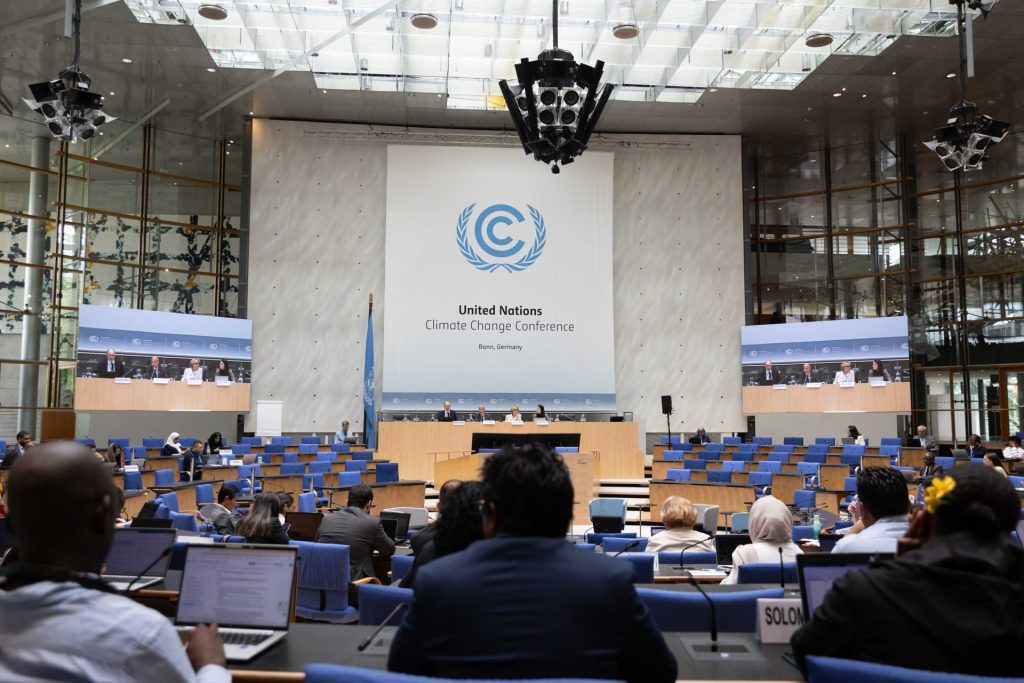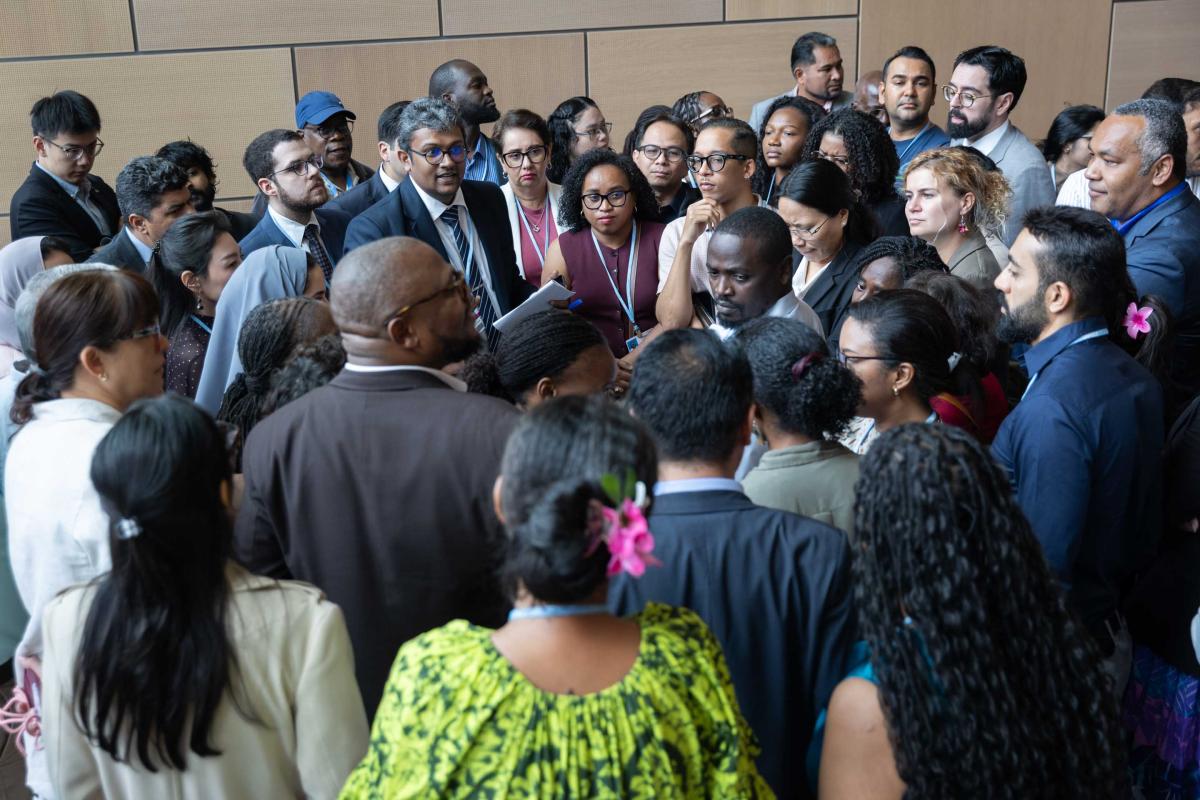
At the closing session of this year’s mid-year climate talks under the UNFCCC and Paris Agreement, known as SB64, UN Climate Change Executive Secretary Simon Stiell, warned that the outcome was a “recipe for gridlock.” The description aptly captured the spirit of the meeting where countries stalled proceedings and the making of commitments until others went first, a particularly aggravated form of “you-first-ism”.
Progress was slow and hard won, with procedural squabbles over mandates, debates on whether to welcome or note items, disputes over who would chair workstreams or sit on boards, concerns about fragmentation and overlap within the system, reservations relating to equity, and express and implicit walk backs of previous commitments and understandings.
Some progress was made insofar as countries agreed to the UNEP to continue hosting the Climate Technology Centre, which gives climate technology support to developing countries. And agreement was finally reached on how to create linkages between the various climate funds and the technology mechanism to better finance this overlooked area. There was also agreement on a way forward to address the Just Transition Mechanism and the terms of reference for the Just Transition Work Programme.
But talks were hamstrung over perceptions that the science of the IPCC was being undermined, and that developed countries were backtracking on their climate finance obligations, including the commitment to triple adaptation finance. The was also no consensus on how to take the mitigation work programme, the current home for general mitigation discussions, forward, and the board arrangements to transition the Adaptation Fund to the Paris Agreement. Many sessions could not even agree to informal text to send to COP31, meaning that negotiators will need to start agreeing to text from scratch in November.
Pressures to make progress were intensified by the World Meteorological Organization’s warning of a severe and potentially record breaking El Niño this year. Adding to existing geopolitical tensions, were constrained budgets as a result of energy and fertilizer shortages flowing from the war in the Middle East. Representatives were also dispirited from last year’s poor COP30 outcomes, which ended in a stalemate over a failure to refer to fossil fuels in the agreed texts, and a confusing, one-sided and hurried agreement over the Global Goal on Adaptation indicators. In this brief overview we reflect on some of the highlights of the mid-year talks, focusing on those elements with particular relevance to Africa.
Adaptation
Last year ended in relative confusion and displeasure over the process for agreeing to the indicators to measure the Global Goal on Adaptation (GGA). In Bonn, countries were tasked, among other things, with determining how these indicators and targets would be integrated into national reports, and the technical work that underpins how the indicators are measured.
African countries, together with other developing states wanted these two processes to be discussed together, but the group of Like Minded Developing Countries pushed for them to be dealt with separately. Countries could also not agree on the creation of a taskforce to oversee the technical work. But the biggest standoff related to how to refer to adaptation finance in the draft text. African and other developing countries wanted express references to the duty of developed countries to provide finance under the Paris Agreement, and a repeat of last year’s commitment to triple adaptation finance. They argued that without these funds, adaptation and achieving the GGA will remain challenging. But the EU, UK, Canada and Japan opposed any reference, on the logic that finance was already addressed by other groups in the negotiations, calling for the text to be deleted outright.
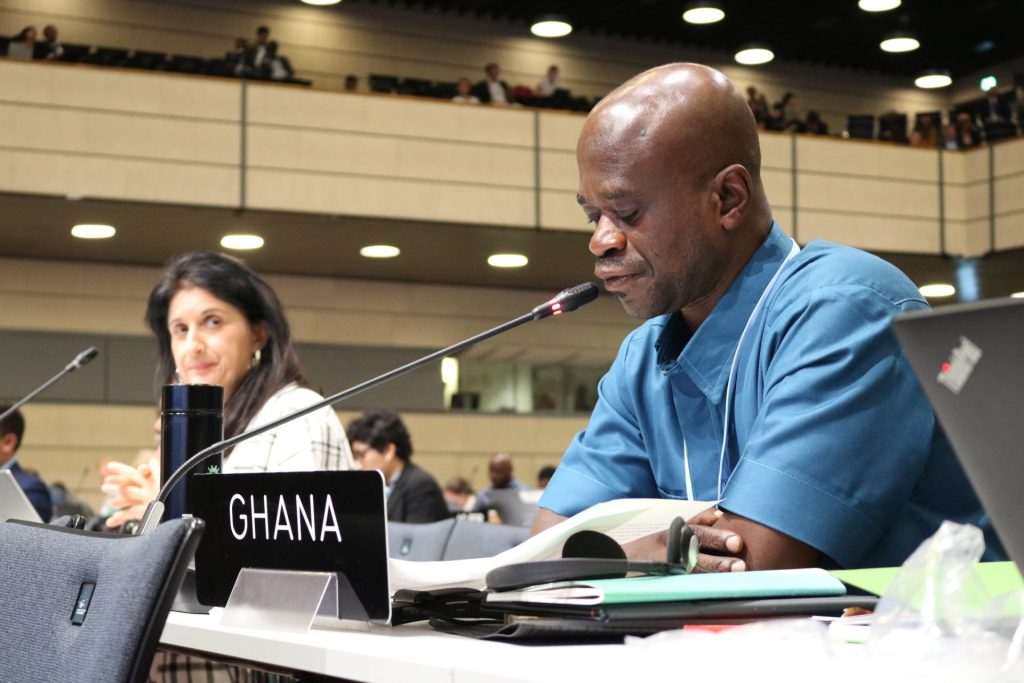
Midway through the talks, the AGN’s chair, Nana Dr Amoah, shared that the group was “very concerned about the resistance from some parties to engage concretely on the tripling of Adaptation Finance agreed at COP30, which built on the Glasgow Target. This hard won target is at risk of being erased from the SB64 conclusions. [These talks] must lay a clear pathway for COP31 to formally reaffirm the Glasgow pledge and establish boundaries for achieving the pledge”
Despite heads of the delegations meeting in the final hours to try and resolve the matter, they could not reach agreement on the way forward, and the issue will be rolled over to COP31.
Finance
One of the material triumphs of last year’s COP was agreement to establish a Work Programme on Climate Finance, an important development as hitherto there had been no dedicated home for these discussions with finance debates being splintered across negotiation rooms.
In Bonn countries met to engage on what the Work Programme would address on and how it would operate. But the room split over what the focus of the programme should be. Developing countries (represented by the G77 and China) argued that it should be about the obligation of developed countries to fulfil their legal obligation to provide finance under Article 9.1, and the importance of transparency and complementarity on how climate finance is reported. The EU, Switzerland, Canada and Japan however sought to broaden the focus to an implementation of the New Collective Quantified Goal (NCQG) as a fulfilment of climate finance obligations.
The NCQG has various components to it, including the goal of mobilising $1.3 trillion annually by 2035 from all sources, and a narrower goal of “mobilising” US$300 billion a year with “developing countries taking the lead”. The language of these two targets is less explicit on what is expected of developed countries, and also shifts the burden to the private sector and other sources of finance, making the NCQG an unhelpful platform upon which to interrogate developed country obligations. This speaks to the years long battle about what the focus of the climate finance talks should really be about how central or catalytic concessional public finance really is or should be and about whether the focus should be on provided or mobilised funds.
There were also calls from Switzerland to expand the contributor base, for example to include richer developing countries, while the Arab group called for a more predicable burden sharing arrangement between developed countries, setting out who would provide what finance and when. Lastly most developing countries, including the AGN pushed to have the climate finance work programme as an agreed agenda item for the COP talks. This seems like an obvious addition, but it is not yet certain whether it will be.
Mitigation
Although mitigation and reaching the 1.5 degree target is an issue that filters throughout the various negotiation items, one of its functional homes over the past few years has been the Mitigation Work Programme, which was created in 2022. This programme has been primarily dialogue focused and is meant to be non-prescriptive. It is scheduled to run until the end of this year, and a decision must be taken at COP31 on whether to extend it and on what terms.
In Bonn, countries could not agree on what the scope and focus of the programme should be. Some countries felt it should support the outcomes of the Global Stocktake (GST) that first took place in 2023. That would mean the programme would become about the GST mitigation goals, including the more specific targets it introduces, such as tripling renewable energy and doubling energy efficiency by 2030, and “transitioning away” from fossil fuels. It would also be about informing future GST outcomes and future NDCs. This suggestion was opposed by the Arab Group and LMDC group, with Egypt strongly opposing any linkage between the two.
There was also disagreement on whether to retain the programme. Least Developed Countries (most of which are African) wanted to keep it as a permanent agenda item, and to build on it so that it had a technical arm or committee to support implementation. This was echoed by other developed countries who wanted the programme to have more “consequential” outputs, such as policy guidelines to governments for their NDCs.
India, Egypt, Kuwait and the UAE however said that the mandate of the programme was limited to the current decade, and that it should not go beyond that. The African group was more equivocal, stating that it still needed to be convinced about its usefulness, noting that support in its Investment Focused Events had mostly been technical and no funds had actually flowed to projects under it. The group did recognise however that the dialogues themselves had provided an educative space for exchanging views which might justify its continuation. But the group and many other more advanced developing countries underscored that any continuation should not be top-down and should recognise the original safeguards that they had agreed to: that the programme would respect the policy space of countries to self-determine their own mitigation agenda and not be prescriptive.
Ultimately countries could not agree on the future of the programme. The same tensions around linking mitigation efforts to the GST and NDC guidance cascaded into discussions around the consultation event for the Belém Mission to 1.5°C, which was agreed to at last year’s COP, which seeks topublishing a report for decision-makers prior to COP 31.
Just Transition
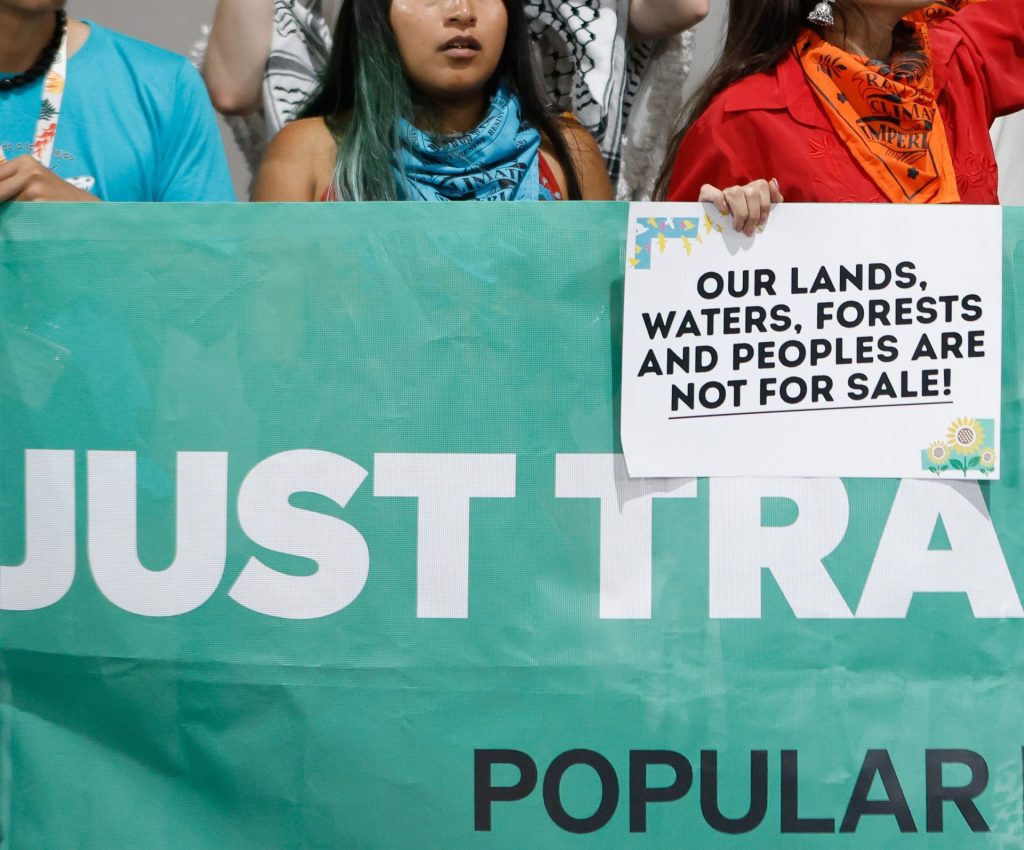
The Just Transition Work Programme was established in 2022. In Bonn countries were to decide on the terms upon which it would be reviewed, and to give guidance on its further implementation, and agree to an indicative list of elements to help operationalize the “Just Transition Mechanism” that was created last year. The mechanism was a particular priority for African negotiators, who argued that it was central to its development realities and priorities. Many of the continent’s objectives, including green industrialisation and critical minerals to universal energy access, sit within the broader just transition agenda.
But in the early days of the discussions, developed countries (EU, Japan, Norway, UK and Canada) appeared to walk back the agreement on the mechanism by suggesting that countries first needed to undertake a mapping exercise on existing arrangements under the Paris Agreement and other UN entities, to see if a mechanism was really needed, citing budgetary constraints, institutional scarcity and fragmentation. While certainly the new mechanism will add a further layer of complexity to an already burdened system, suggesting that one of last year’s victories for developing countries be revisited will only exacerbate already high levels of tension and mistrust.
After a hard won battle most parties accepted the package of draft text on the terms of reference for the work programme in the spirit of compromise although not much progress was made on the mechanism.
Trade
SB64 hosted the first trade and climate dialogue which was agreed to last year. While generally cordial and constructive, there was debate about what the scope of the dialogues should be, and how the outcomes from each event should be captured, and whether it prompted the need for a separate agenda item (something the AGN wanted). This time it was the EU that said there should only be a report at the end of the talks in 2028, while other developing countries motivated for some an interim document that captured the discussions.
In the formal dialogues on response measures (namely climate measures that have indirect effects on other countries, such as the CBAM and carbon taxes), similar dynamics played out. The G77 and China wanted the outcome of the discussions to capture more detail. Importantly they wanted a synthesis of the outcomes to then be used as a material input into the next global stocktake, a position that the UK and Canada rejected. In sum it was about whether or not to ensure that more information and captured concerns of developing countries when it came to unilateral trade measures are captured in and addressed in the global stocktake. Ultimately countries could not agree to any outcome at the session.
Agriculture
Agriculture has always had a special place in the negotiations being the only specific sector to have its own dedicated forum. In 2022 countries agreed to a “joint work on implementation of climate action on agriculture and food security” that is due to expire this year in November. This work includes a synthesis report on work that is relevant to agriculture, workshops and an online portal for projects and initiatives.
At Bonn countries however could not agree on how to capture the workshop held two years ago with debates about whether to include mention of subsidies, intellectual property restrictions, finance, and other issues. Ultimately countries agreed to a much shorter text that had no key messages from the workshop. In its closing remarks the AGN added that the group should remain focused on agriculture and food security, as originally agreed, and not on transformative agriculture, which it felt was inappropriate for the nature of the work.
Science
One of the surprising aspects of the Bonn talks was the level of contention over the science. This had been brewing for some time but came to a head in several negotiation rooms with some countries allegedly launching “attacks on science” including the 1.5 degree goal, and delegates disputing over who was spreading “misinformation”.
Part of the debate also centred around how to align the timing of the next IPCC assessment with the Global Stocktake, where some countries wanted the IPCC to pursue an accelerated timeframe to have the AR7 Report ready for the next global stocktake. India objected arguing that the IPCC timeframe was outside of their mandate. Commenting on the debate during the discussions, the AGN argued that there was a misperception and that they supported the science. Their only concern was that the group did not want to compromise the IPCC process, particularly since other entities that also used the IPCC.
Next COP, Next Steps
Looking forward, developing countries are keen to see a dedicated agenda item at COP31 for the climate finance work programme. The AGN is also looking for an agenda item on trade, calling it “inexplicable” that there was still no agenda item for these discussions ahead of the high level event in 2028.
South Africa also has been calling for a timely discussion about COP33, which was initially going to be in India before they withdrew the offer. COP33 is due to be held in Asia-Pacific but there is currently no party that has expressed an interest to host it.
Coming away from the talks, developing countries expressed their final disappointment through the G77, particularly on progress with the GGA and adaptation finance. They also want to see more progress in talks on agriculture.
The AGN lamented “stonewalling” on adaptation, and the degrees of resistance it encountered on the adaptation finance goal. They expressed concern on the limited and “patchy” progress on the just transition mechanism. If talks go this way at COP31, it will be difficult to see a way forward after that. Hopefully SB64 was the bad dress-rehearsal for a better performance.