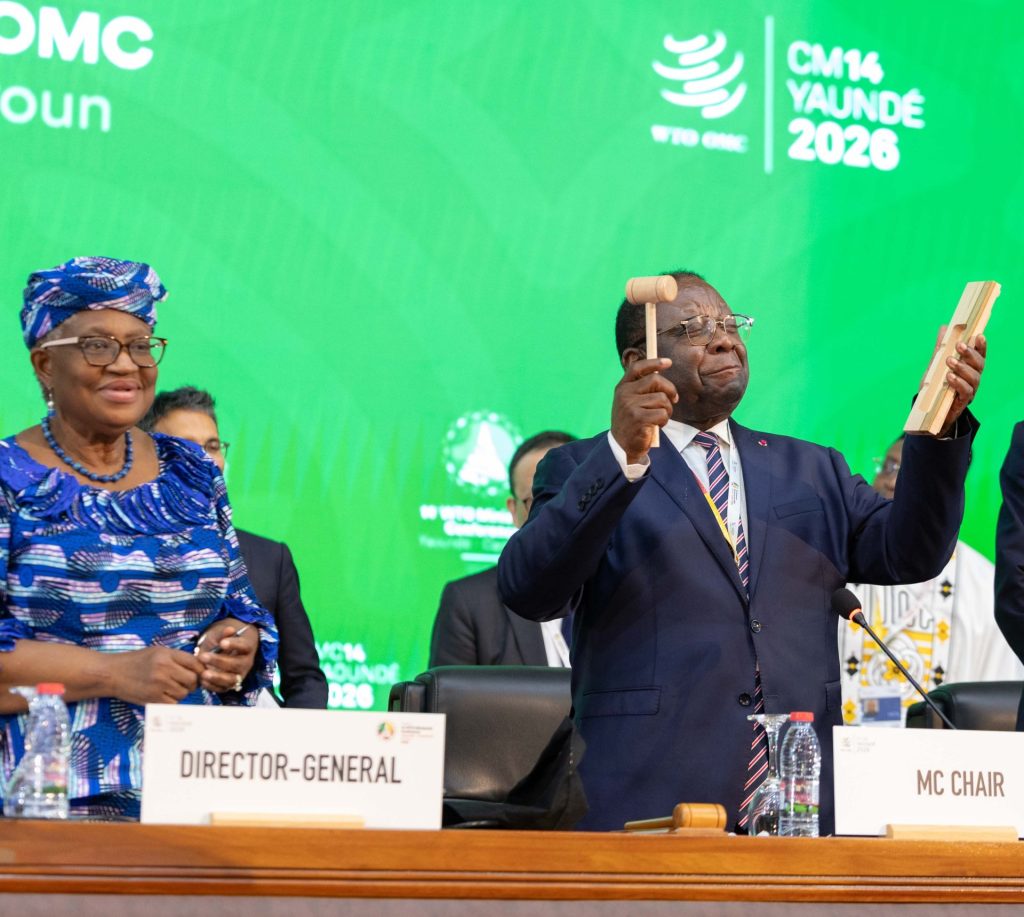
At the end of March, Trade Ministers met at the 14th Ministerial Conference (MC14) in Yaoundé, against the backdrop of rising geopolitical tensions, highly disrupted global trade and a global energy shock. While climate change has often featured within the organisation’s discussions, it has not found any formal home or place on the agenda. That has not stopped members from launching their own initiatives. Since 2020, the WTO Trade and Environmental Sustainability Structured Discussions (TESSD), a dialogue led initiative of 79 members has broadly focused on a range of environmental and trade issues, including on climate, led by its Working Group on Trade Related Climate Measures. This body has focused on dialogue and the sharing of experiences, with a goal of enhancing cooperation. At MC14, the group released a document mapping the climate related trade policy measures adopted by members, accompanied by high level practical suggestions of how to achieve cooperation. And TESSD is not the only group. There is also a separate WTO Fossil Fuel Subsidy Reform Initiative which seeks to seeks to rationalise, phase out or eliminate harmful fossil fuel subsidies.
But the WTO has yet to address, head on, some of the more controversial aspects of trade related climate measures, such as the Carbon Border Adjustment Mechanism (CBAM), opting for facilitative, less represented and member driven initiatives. For example, from Africa, only Cabo Verde, Chad, the Gambia, and Senegal are part of TESSD.
While still not a central issue at the WTO, the trade-climate nexus continued to emerge at MC14, illustrated by a briefing on the Integrated Forum on Climate Change and Trade (IFCCT) led by Brazil and Australia, the adoption of a communique by the Coalition of Trade Ministers on Climate, and the reaffirmation of 48 WTO members of their commitment to fossil fuel subsidy reform, now with a focus on transparency and “temporary crisis measures”.
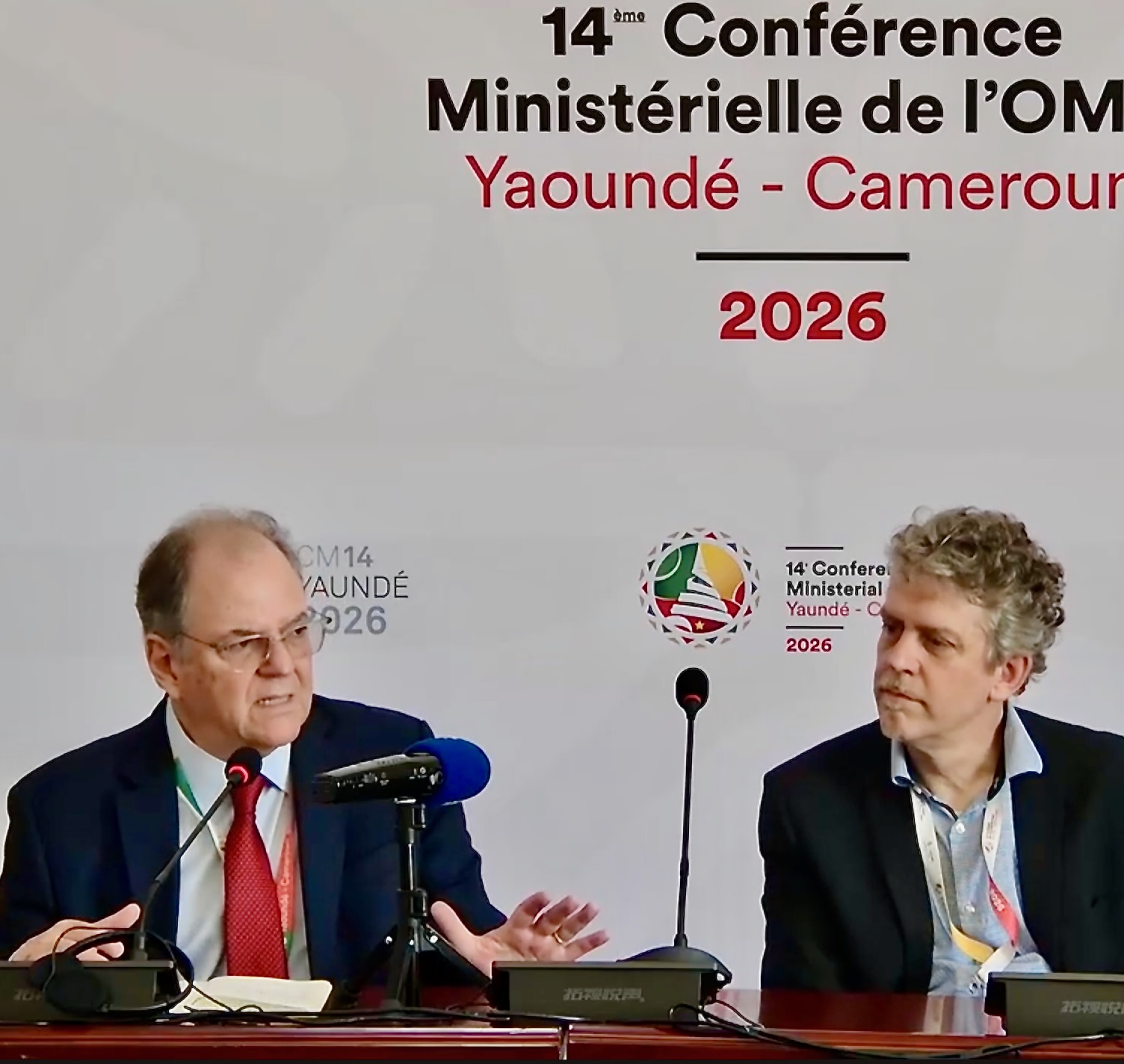
The most interesting of these developments was the frank discussions around the lack of coherence, coordination and understanding between trade and climate talks, an issue pointed out at the IFCCT briefing, led by Brazil’s permanent representative to the WTO, Guilherme de Aguiar Patriota.
The IFCCT was launched at COP30 by the Brazilian COP Presidency, alongside the COP’s cover text agreement of a three year climate and trade focused dialogue, with the participation of WTO, designed to culminate in a high level event in 2028. The forum is currently being co-led by Brazil and Australia. Designed to be institutionally independent of the WTO and UNFCCC, it does not create rules or arbitrate disputes. Instead, it is primarily geared to build trust, to bridge the divide between climate and trade ministries and to transcend the gap between trade and climate negotiations.
As de Aguiar Patriota pointed out, typically governments deal with trade and climate change separately, with dedicated ministries and separate negotiation representatives. These ministries are not used to working together and operate in different worlds. To overcome this divide, the IFCCT has two focal points representing each country, one from the climate and environmental ministry and the other from trade, ensuring that each becomes versed in the negotiation language, rules and focus areas of the other. It aims to be facilitative in nature, without wanting to put any one particular measure under the spotlight, working towards broad thematic areas for discussion, such as due diligence requirements for sustainability.
Acknowledging this divide, de Aguiar Patriota emphasised: “we can’t just talk about this forever and not reach an agreement as to how to actually do this because neither the WTO nor UNFCCC [representatives] have really made a huge leap in that direction.” He admitted that some do not see the value add, but also pointed out that there are many who are “very defensive on the climate side, they really are afraid to interact with trade negotiations [representatives], they find them really specialised in the legal aspects of trade rules which they don’t understand that well, and they feel trade [representatives] don’t know anything about climate change and the history of the UNFCCC.” It is ultimately about a lack of language, understating and shared expertise between the two fields.
It is also reflective of different negotiation styles. De Aguiar Patriota pointed out that the UNFCCC is also fairly complex, and requires a different way of thinking and working diplomatically, being more UN like in nature. The hope is that this new body will build the trust deficit, lower suspicions, generate commonality between the two regimes, and foster inter Ministerial partnerships and understanding within and between governments.
The forum is also intended to generate knowledge across the two sectors. The body of measures relating to climate change and trade is amassing at pace, for example emissions trading schemes are now more widespread, but they operate differently, are densely regulated and are increasingly complex and not well understood. The Forum is felt to be a better placed arena to discuss these complexities (although there is some obvious overlap with TESSD), by lowering the level of formality, discussions may be more fruitful than they have been at the UNFCCC and WTO.
De Aguiar Patriota was careful to point out, however that the forum was not there to discuss the legality of measures such as the CBAM, which is currently evolving “outside of the system”, but rather to dwell on its aspects that have relevance to a wider set of issues. For example how embedded carbon is measured in goods has relevance for a broad range of measures and where there is some fragmentation.
As an initiative of the COP30 Presidency, the hope is that it will shepherd progress on trade within the UNFCCC and WTO through feedback loops, with de Aguiar Patriota pointing out that trade and climate dialogues often languish within the UNFCCC, with politicised established decisions sticking to the general and on points of equity, and failing to progress to specifics. Within the WTO they want to work against the knee jerk reaction that keeps climate and trade talks out of the more formal discussions and towards the margins, with some members not wanting to prioritise trade and sustainability concerns. But as he observed, they are now a reality, “you have to deal with them somehow. It can make somethings worse, it can make some things better”.
The IFCCT has recently concluded its consultatory phase and is gearing up for its first meeting at the sidelines of the June inter-Ministerial climate talks in Bonn this year. It will work to establish a panel of experts to advise it, which will include Jo Tyndall from New Zealand, a long standing climate diplomat who worked on the integration of climate and trade and the Paris Agreement, and Prof Faizel Ismail,a former chief trade negotiator for South Africa, former chair of various WTO Committees, and a well-known scholar on African trade relations.
If African countries want to voice their concerns or opinions on climate related trade measures (acknowledging capacity and resource constraints to send delegates to these meetings), and meaningfully gain from the shared knowledge outputs they create, they should be actively participating within the IFCCT or at least its sister initiative, TESSD, which currently has only a handful of African members.