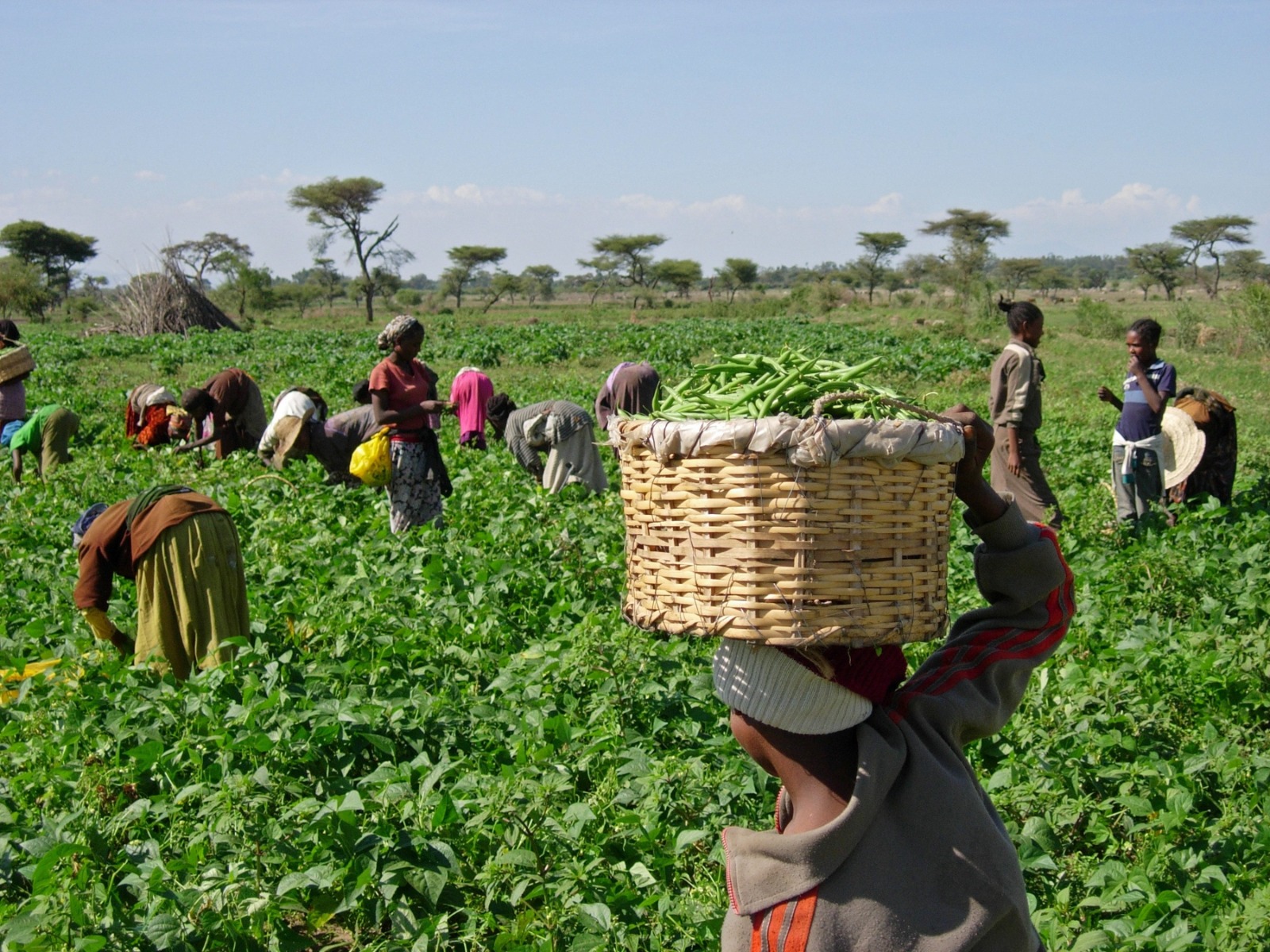
African countries already face high levels of food insecurity as a result of climate change. Six weeks of sustained conflict sparked by joint US and Israeli strikes on Iran that have spread to Lebanon will only intensify food insecurity in the region. The conflict has led to massive disruptions in global supply chains following a near full closure of shipments through the Strait of Hormuz.
Four days ago the UN Food and Agriculture Organisation warned that the crisis could result in a global agrifood catastrophe, if ships carrying agricultural inputs such as fertilizer were not allowed free passage. The current blockade will lead to a dangerous spike in food price inflation later this year, which the organisation anticipates will lead to a cascade of effects similar to the aftermath of the COVID-19 pandemic.FAO Chief Economist Maximo Torero warned that the clock is ticking, and crop calendars put poorer countries most at risk of scarce and pricey fertilizer and energy inputs, anticipating that prices will escalate throughout this year and next year. According to the organisation, between 20 to 45% of key agrifood inputs rely on sea passage through the Strait of Hormuz. Recent escalations in the cost of fertilizer have seen prices surge by more than 30%, with concerns that wealthier nations will be able to outbid poorer countries in global fertilizer auctions.
Farmers, who already face thin margins, will have to decide whether to switch what they plant, and some may choose to allocate more land and inputs to biofuels to benefit from higher oil prices. Those that have already planted will be in need of additional support from their governments.
According to the United Nations, a diplomatic push is underway on a proposal for a resolution to ensure safe passage for fertiliser shipments through the Strait of Hormuz. Urgency for the measure has been heightened by the US stating on Monday that it will blockade much of the maritime traffic entering and exiting Iranian ports and coastal areas.
The standoff has difficult implications for African countries, and exposes the region’s reliance on highly concentrated fertilizer supply chains, shaped by production hubs and energy markets outside of its control. Countries that are net fertilizer importers are particularly at risk, including Ethiopia, Côte d’Ivoire, Zambia, Kenya, South Africa and the Democratic Republic of Congo. The agriculture sector also employs between 60-70% of the workforce in Africa with 250 million small-scale farmers.
At present, production in Africa is too uneven and insufficient to meet demand, although potential exists to grow fertilizer capacity from phosphate deposits and oil and gas reserves in North and West Africa, with Morocco, Nigeria, Algeria and Egypt all being known suppliers. Much of the narrative following the conflict in the Gulf has been around the need to pursue energy security and independence in Africa, but equally it needs to consider how African countries can become more resilient to food system shocks.
There are many ideas of how this can take place. One is for African countries to reduce their external dependency and reap the co-benefits of natural gas exploitation in Nigeria, Mozambique, Tanzania and Senegal as well as phosphate resources in Morocco and Tunisia to create fertilizer inputs. The recent announcement by the Dangote Group that it plans to quadruple its fertilizer production, aiming to make it the world’s largest urea producer by 2028, and to double the capacity of its Lagos-based petroleum refinery, follows this logic. Speaking at the launch of Dangote’s plan, Afreximbank President George Elombi said the discussions reflected a shared goal of reducing Africa’s reliance on imports and boosting local production.
However, these types of expansions tie parts of the region into longer term fossil fuel production infrastructure and associated emissions trajectories. This creates an interesting tension around resilience: will African countries require fertilizer to become more resilient to climate change and global agri-input shocks, while tying their hands with long term fossil fuel production infrastructure?
Others advocate another way, calling for climate smart agriculture as the pathway to increased climate resilience, through the pursuit of agroecology, regenerative farming, and conservation agriculture, measures that are less dependent on fertilizer inputs. Historically the AGN has pursued a mixed approach arguing for both increased access to agricultural inputs, promoting local fertilizer production and enhancing climate resilient agricultural practices and technology transfers.
These are all measures focusing on the medium to long term. Over the next year, African governments will be constrained to offer more immediate support to local farmers to tide them through the season. There are multilateral options available, such as the International Monetary Fund’s balance of payment facilities, and the Food Shock Window(which officially closed in 2024 but could be reopened) which countries can use to quickly finance access to fertilizers. However, historic access to the Window’s funds was uneven access to these funds and many borrowers unable to take on higher levels of debt.
Stockpiling is also another obvious solution. Recently, Russian representatives made overtures to create joint food reserves with fellow BRICS members. “To ensure food security, it is highly important to expand cooperation with friendly countries, primarily the member states of the Eurasian Economic Union and BRICS, including through the creation of joint food reserves,” Alexander Maslennikov, the Deputy Secretary of the Russian Security Council, was quoted as saying by local news sources.
This raises the question of whether African countries should consider stockpiling their own food reserves to tie them through shocks, be they conflict or climate related. This issue recently came to the fore under WTO discussions on food stockpiling. World Trade Organization (WTO) rules restrict a country from stockpiling food staples by preventing governments from purchasing food for stockpiling at “administered” prices, namely fixed or minimum prices, established by the state in advance. A guaranteed price floor can boost domestic food production and offer income security for farmers, which can encourage increased investment and outputs by them. However, these guaranteed prices are seen as a form of subsidy contrary to the free trade objectives of the WTO rules. By restricting governments from this practice, it limits the ability of poorer countries to build up food reserves to guard against hunger and price volatility during crises.
In response, African countries and academics have been arguing for WTO rules to be reformed to give governments greater scope to build and operate food reserves so that they can more rapidly respond to climate or other food system related shocks. The solution, they argue, lies in revisiting how subsidies are calculated to farmers.
In 2022 the African group led a coalition of 80 developing countries pushing for the reform of this calculation. However, it was met with opposition by the US and other leading agricultural exporting countries, such as Canada, Australia, New Zealand, Argentina and Brazil who feared it would undermine commercial agricultural opportunities, distort markets and lead to the dumping of subsidized products on other markets – a concern that could be addressed via safeguards. This issue remained contentious at the 14th Ministerial Conference of the WTO (MC14), held in Yaoundé, Cameroon in March. Here again, public food stockholding for food security purposes remained a contentious, unresolved issue, with developing countries and LDCs pushing for a permanent solution.
Ultimately, if African countries are to weather the shocks of the most recent crisis in the Gulf, they will need short term solutions that enable them to support farmers and their populations until such time as medium and longer term measures are realised. More immediate solutions such as public food stockholding become attractive in this context. However, countries must still navigate trade rules that hinder the ability of governments to flexibly respond, underscoring the urgency of ongoing WTO discussions on this topic in Geneva post MC14.