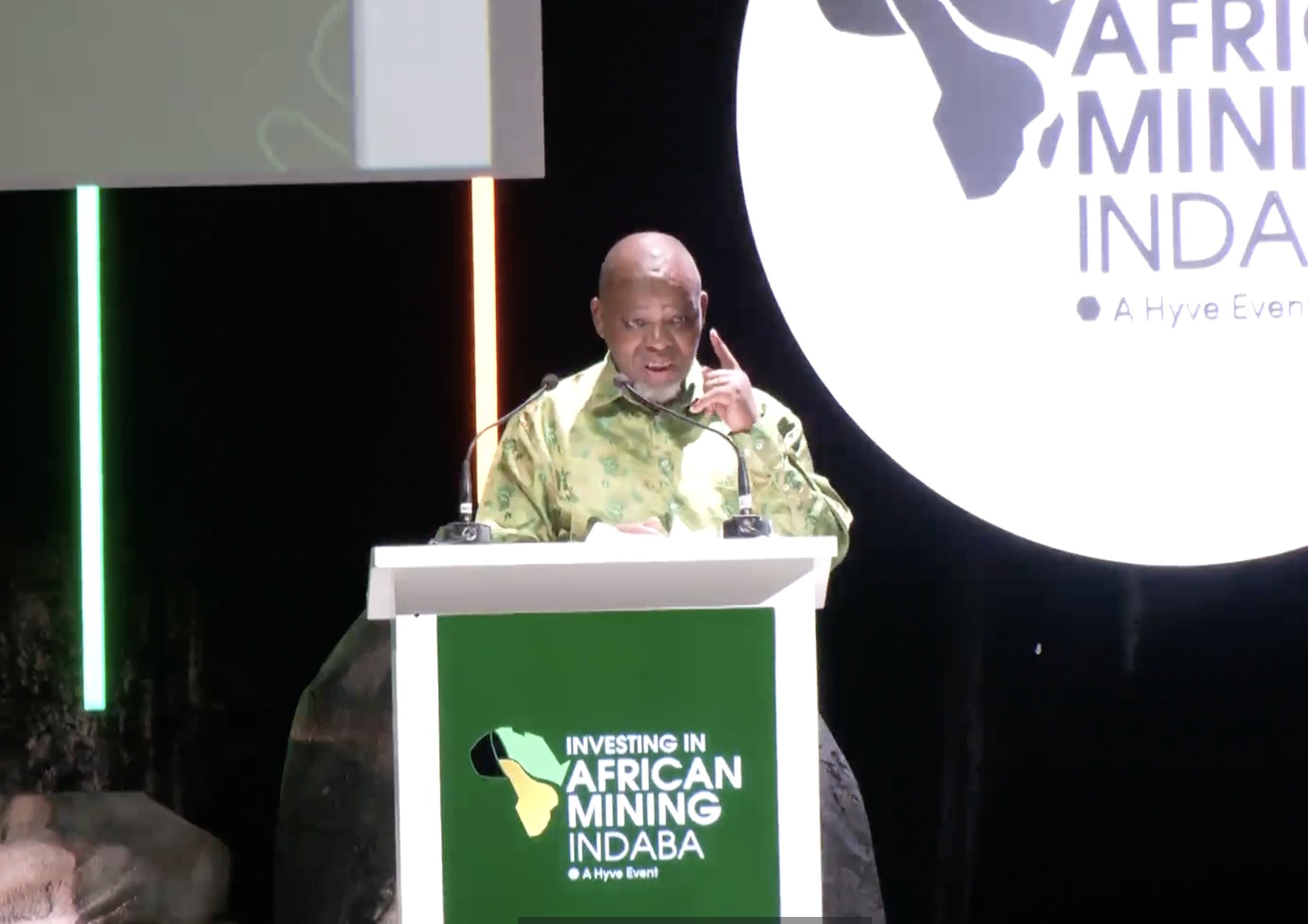
The South African Mining Indaba, host to almost 10 000 attendees from across the world, is almost over. A bevy of US Energy officials are also in attendance, notwithstanding currently frosty relationships between the two countries, and South Africa being barred from attending the G20 in the US.
The US delegation is the largest one at the Indaba yet, and includes representatives from the US Trade and Development Agency (USTDA); Department of State: Bureau of African Affairs; the International Trade Administration (ITA) and the Department of Energy, symptomatic of the States’ ever increasing interest in African critical minerals. This follows recently announced plans by the US to create a trade zone for critical minerals, with price floors which are intended to reduce market fluctuations and to counter China’s influence in the sector. The decision follows a summit on critical minerals held by the US in Washington earlier this month, with several African leaders in attendance. It also follows President Trump’s decision to sign legislation that gives life back to the African Growth and Opportunity Act (AGOA) trade preference program up until the end of this year.
Speaking at the conference, USTDA Deputy Director and COO Thomas Hardy reemphasised the US’s interest in critical minerals by offering US support for the early stage exploration process. Explaining that these minerals were often found in complex ore bodies, Hardy proffered that the US could play a crucial role in these early project stages, helping to ascertain the nature of the target resource. This however, would mean sharing large scale geological data outside of national boundaries.
This type of extra-continental collaboration is something that South Africa’s Mining Minister, Gwede Mantashe, thinks is misguided. At the Indaba, Mantashe publicly criticised the Democratic Republic of the Congo for inking a critical minerals deal with the US, arguing that it threatened African sovereignty by exacerbating the scramble for Africa’s natural resources. Instead he urged African countries to “deepen collaboration” with one another. “It can’t be about you. It should be about us all in the region,” he said.
What this looks like in practice varies, but several approaches have already been put forward in the AU’s Green Minerals Strategy from 2024, such as focusing on the development of regional infrastructure, the creation of a Mineral Value Chain Investment Fund and using the African Continental Free Trade Agreement to create regional value chains.
But to get out of the starting blocks on the right foot African countries first need data. Exploration data is a valuable resource and those who hold it hold the power to influence how resources are used. Many African countries have limited to geophysical data on their minerals. Without this information countries may either risk losing on the opportunity to access their critical minerals or significantly weaken their bargaining powers. Some estimate that the continent holds up to 30% of known critical mineral reserves, but others estimate it could be less or significantly more- the existing empirical data is currently too uncertain.
Climate Home News has reported that many historical maps are held by former colonial powers, and in many cases they hold more data on African mineral deposits than national governments do. While the World Bank has provided African governments with finance to support the generation of more data through the African Mining Legislative Atlas, it has a chequered past with historically encouraging states to liberalise their mineral economies.
To rectify the lack of data, the AU’s Green Minerals Strategy advocates the expansion of domestic budgets through mining rents to better fund public research and survey institutions and more efforts into multi-country surveys by the Organisation of African Geological Surveys. In a similar fashion, the G20 Critical Minerals Framework developed under the South African G20 Presidency last year, aims to create a clear map or inventory setting out the location of critical minerals across the continent, especially in underexplored areas. Not only is this to empower government with data, but it will also ensure support decision making to avoid mining in areas of high environmental sensitivity or which are occupied by communities. Who holds this information is however likely to be a hotly contested issue.
All of the above are also longer term projects that would take time to resource and capacitate national institutes or to establish a regional or global inventory. Artificial Intelligence (AI) could potentially create more immediate solutions but at a cost. At the Indaba this week, the DRC signed a deal with a US investment company, Atlas Park, that will deliver AI-driven geological research to map the nation’s minerals. The five year agreement, will entail an examination of legacy data as well as the carrying out of new surveys. The findings will be shared with the DRC national geological service, but will also be driving the Atlas Park’s future investment decisions, undoubtedly within the DRC’s mining industry.
If African countries are to get the data they need and hold onto it they will need to start investing in exploration data and claiming rights and become competent explorers in their own lands. Because asserting leverage and more sovereignty over minerals isn’t just about the minerals themselves but also the means to find them.