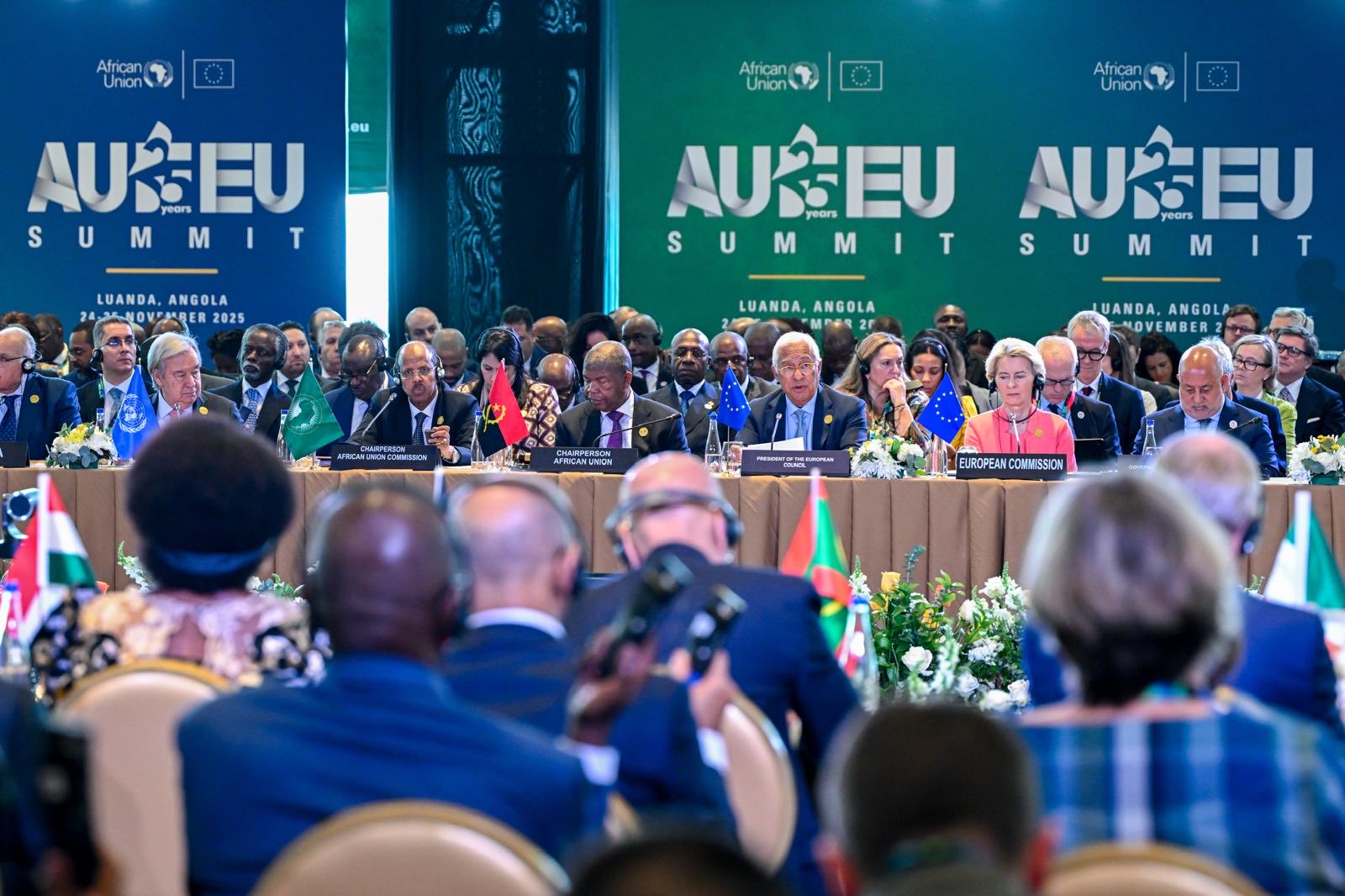
The Summit, held on 24-25 November 2026, came in the context of multiple and deepening intersecting crises from debt distress, climate change, rising poverty, heightening security and economic related geopolitical tensions, and an increased use of tariffs.
As host of the summit, the AU had sought to raise ambition and to reset the partnership by adopting measures that addressed these challenges. Instead of following an easier path (which would have entailed lifting text from the AU-EU ministerial outcome document, in whose development and finalisation the EU played a dominant role), the AU initiated a draft with new elements that both sought to address these issues and project Africa’s interests more assertively than before.
The EU’s proposed revisions to the draft, however, left little of the substantive content from the AU’s version.
The AU draft outcome document was by no means perfect. It did not go far enough in proposing measures to address the structural conditions embedded in the international financial order that create cyclic debt distress, such as those advanced in the joint Namibia-Amani Africa High-level Panel of Experts on Africa and the Reform of the Multilateral System, and the AU’s Common African Position on debt. But it did enjoin the AU-EU to a number of targeted commitments, one of which was “to take decisive actions to address the high debt premium of borrowing countries, especially in Africa, that pay significantly higher interest rates compared to their peers despite similar risk ratings.”
What is striking about the changes introduced by the EU is not just that they sweepingly watered down the already reasonable formulations in the draft from the AU, but that they walked back from common positions adopted in recent global policy forums notably in Sevilla. For example, the EU deleted a reference that reaffirmed the recent initiative to find a sustainable solution to the debt crisis, and removed a reference that welcomed the Sevilla Forum on Debt launched at UNCTAD 19 to tackle entrenched debt crises in developing countries. Signifying the lack of common ground between the two on addressing the structural conditions perpetuating the debt crisis, it was reported that the EU voted against a resolution on sovereign debt under discussion in New York just as the summit was being held.
Things were no better with sustainable development. The AU draft reaffirmed a shared commitment to accelerated economic transformation and sustainable development to achieve inclusive growth and economic opportunities for all. However, not only did the EU remove this text, but its section on a prosperous and sustainable future commences with a language that foregrounds the EU’s Global Gateway Initiative, a change that is reflected in the final declaration adopted in Luanda.
On the Global Gateway Initiative — the flagship investment programme that the EU touts as its investment package to accelerate low carbon energy and other infrastructure in developing countries — the AU draft carried critical elements opposed to the very positive framing reflected in the summit declaration. The AU draft emphasised the need for more transparent and timely investment finance with a measurable impact that supported Africa’s priorities and goals aligned with AU’s Agenda 2063. It had also wanted projects to be selected and implemented jointly to ensure full African ownership and appropriation. These did not find their way into the final outcome document.
The substantive issues raised by the AU regarding the Carbon Border Adjustment Mechanism (CBAM) including its potential to increase costs, limit competitiveness and undermine efforts to sustainably manage natural resources such as biodiversity-based exports, were also left out. Also left out was the reference to ensuring in this regard respect for implementation of Article 3(5) of the UNFCCC (which says that climate response measures should not lead to unjustified or arbitrary discrimination or a disguised restriction on trade). However, the concerns about CBAM became a key flashpoint as the EU faced serious pushback from the AU during in-person negotiations on 11-12 November in Addis Ababa. These issues got bracketed and necessitated intra-EU negotiations. While the EU sought to avoid any reference to the CBAM despite a highly watered-down formulation proposed by the AU, it eventually agreed to language committing only to maintaining open, transparent, and inclusive channels of dialogue on trade-related environmental measures, such as the CBAM and the EU Deforestation Regulation.
Additionally, instead of the reasonable and clear language calling for the provision of adequate timely, capacity building support and flexibility for African countries to adapt to these new regulatory measures, the final declaration stated that the AU and EU would tackle risks posed to African exporters in sustainably managing natural resources, including bio-diversity resources. This language and the text in the final outcome overall masked and downplayed the AU’s legitimate concerns that trade-related environmental measures such as CBAM and EUDR pose a challenge to African natural resource based traders such as Ethiopian coffee producers, and to “sustainably manage natural resources.”
This outcome is not just to be blamed on the EU. The AU made a strategic mistake by negotiating the final draft using the EU’s revised text. This crippled the AU’s negotiating position by limiting the possibility of bringing back into the negotiation all the key elements in the draft it had initiated. However, apart from the reference to CBAM, the AU succeeded by securing the removal of the reference to the ambiguous and problematic language of ‘rules-based international order’, replacing it with a more neutral framing focusing on international order based on international law, accompanied by references to the UN Charter and human rights. It also restored the reference to the work towards the UN Framework Convention on International Tax Cooperation, which was deleted by the EU from the AU draft.
Despite all the appearances of progress and the symbolic changes on display in the lead-up to and during the AU-EU summit, the summit did not substantively mark a departure from the past. It shows the entrenchment of the power asymmetry and the EU’s reflex to dominate the agenda setting process and to shape the outcomes of partnership meetings. The contrast between what the opening speeches projected and this outcome is reflective of what Carlos Lopes called the self-deception trap.
**Solomon A Derrso, a distinguished legal scholar who serves as Adjunct Professor of Law at University of Cape Town and leading expert on the AU, is the founding director of Amani Africa, a pan-African think tank and a perimeter source of information and analysis on AU’s peace and security policy making.