By Mako Muzenda
1. Finance: one step forward, two steps back
Finance has long been at the heart of climate negotiations and frameworks. It is also a longstanding source of disagreements and tensions between the Global North and Global South. The New Collective Quantified Goal was meant to be a commonly agreed upon target for mobilising climate finance for the next decade. What came out of COP29 negotiations left African negotiators disappointed and frustrated. The $300 billion target (within a larger $1.3 trillion commitment that public and private actors will work towards) fell short of expectations. Additional foreign aid and official development assistance cuts left developing countries in the lurch, with LDCs and sub-Saharan countries particularly hard hit. Analysis also predicts that the cuts will continue at least until 2027, with resilience building and adaptation programmes being the most vulnerable.
But the story of climate finance in 2025 is not completely bleak. COP29’s progress on Article 6 of the Paris Agreement progressed the development of a global carbon market, now with a strong focus on implementation. It is good news for African countries seeking to mobilise local resources to fund national climate projects. Kenya, Gabon, the Democratic Republic of the Congo (DRC) and Zambia are amongst some of the countries actively developing national carbon credit schemes, with the UN Commission for Africa estimating that nature-based credits could generate up to $82 billion per year for the continent. Additionally, delegates at COP30 reached an agreement to triple funding for adaptation by 2035, estimated to reach $120 billion. The Baku to Belém Roadmap emphasised the importance of all parties in reaching the $1.3 trillion target. However, finance this year was plagued by recurring issues, with little detail on addressing debt, incentives for the private sector and the responsibility of developed countries to provide adequate finance for developing nations.
2. Renewable energy: turning (and keeping) the lights on
The Africa Energy Summit convened leaders from the public and private sectors to accelerate energy access and generation across Africa. The Summit saw the launch of Mission 300, an initiative led by the African Development Bank Group and the World Bank Group to connect 300 million Africans to clean, affordable and reliable energy. Energy came up again at the Second African Climate Summit, featuring the Africa Climate Innovation Compact, which aims to support African solutions for energy and other sectors by 2030. It was a key feature of the Luanda Infrastructure Financing Summit with the launch of a multi-billion dollar financing facility that has energy as one of its priority areas. Pledges from COP30 committed to scaling renewable energy generation and access, although negotiations failed to produce agreements on explicitly transitioning away from fossil fuels. To round off the year, the AU-EU Summit produced the Green Energy Initiative, which aims to provide at least 50GW of electricity from renewables for 100 million people by 2030.
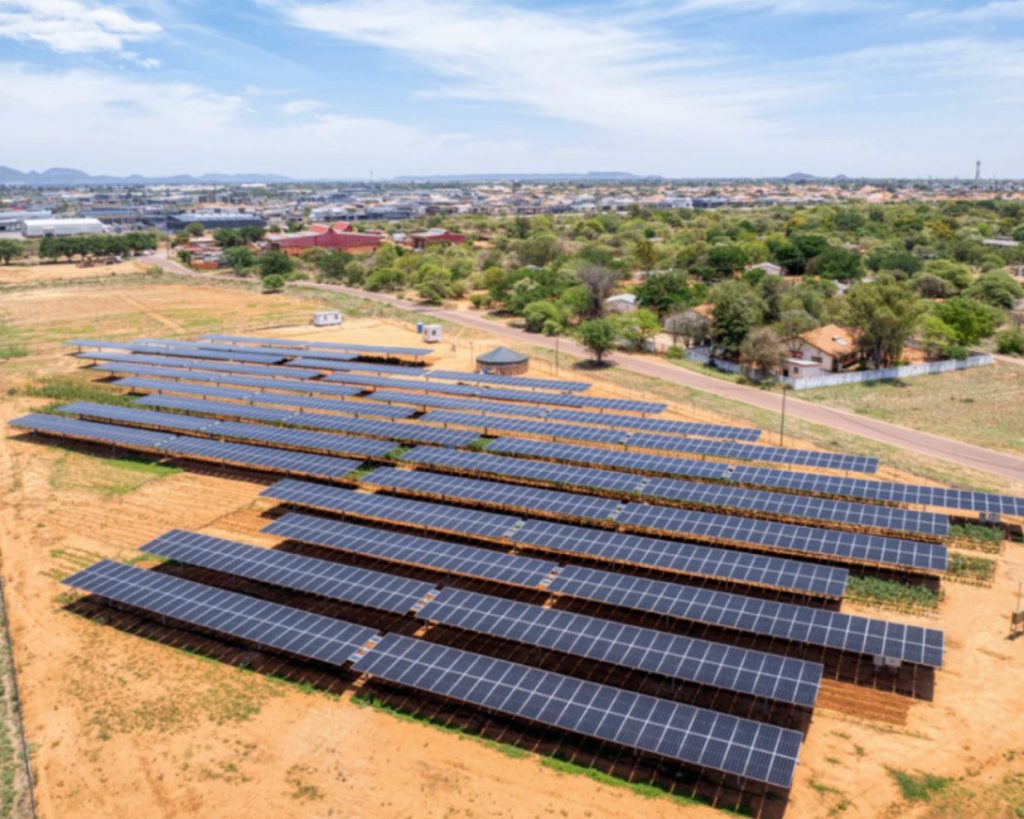
The focus on energy meets both immediate and long-term needs. More than 600 million Africans lack access to reliable and affordable energy from renewable sources, despite the continent’s capacity to generate solar and hydro-electricity. Renewable energy development translates to less reliance on fossil fuels (facilitating the just transition), improves resilience in vulnerable communities, increases economic growth and productivity and decreases deforestation. Solar power took off across Africa in 2025, thanks in part to affordable solar panel imports from China. Although fossil fuel continues to be a significant part of Africa’s energy mix, this year shows that renewables will play a large role in the continent’s energy future.
3. Multilateralism is dead. Long Live Multilateralism.
The year started off with a raft of announcements from US President Donald Trump, among which was a series of funding cuts and the ultimate closure of USAID and the country’s withdrawal from the Paris Agreement. Although this stance was expected, the suddenness of reversals of climate commitments was still a shock. The introduction of tariffs by the Trump administration and trade wars between China and the USA further compromised multilateral systems and platforms. Then came the deadline for the third Nationally Determined Contributions (NDCs). Many African countries were late in submitting but there was a strong showing in the end, with most evidencing relatively high ambition, but conditional on international support. South Africa’s G20 Presidency was met with resistance from the USA, which did not participate in climate-related working groups and boycotted the Summit in Johannesburg.
The USA’s withdrawal from climate commitments, slow progress on NDCs and geopolitical tensions certainly presented challenges. However, 2025 showed that climate multilateralism is more resilient than it may seem. The G20 Summit produced a Leaders’ Declaration. Ironically, the USA’s absence from the Summit arguably facilitated agreements on the Declaration. A similar scenario played out at COP30, with negotiators reaching agreements on the Gender Action Plan, Just Transition Mechanism and a forum to engage on trade and climate. Although countries failed to overcome longstanding disagreements (specifically between Global North and Global South), the spirit of climate cooperation is still alive.
4. Africa’s seat at the Table
The Global North continued to dominate negotiations from Bonn’s June climate meetings to Belém’s COP30. However, this year was a standout for the Global South. Two important summits – COP30 and the G20 Summit – took place in the Global South, with South Africa being the first African country to host a G20 Summit. The latter is also the first time the AU participated as a permanent member of the group. Other summits such as the Wetlands COP (hosted by Zimbabwe), the AU-EU Summit (hosted by Angola) and the second Africa Climate Summit (hosted by Ethiopia). South Africa and Brazil were clear in their intentions to prioritise the unique needs and positions of the Global South in their respective presidencies, and while the outcomes were a mix of progress and stagnation, the shift (albeit temporary) away from the Global North was a welcome development. The ICJ’s advisory opinion on legal responsibility for climate change was another win. The Court found that states can be held responsible for climate change under international law. Although not legally binding, it can provide leverage in negotiations in favour of developing countries.
As 2025 draws to a close, taking stock of the gains and losses is part of preparing for the year ahead. With Türkiye and the USA assuming the COP and G20 presidencies respectively, and with African countries gearing for a long build up to 2027’s COP32 in Ethiopia, next year promises to be as eventful as this one, if not more.